Home

Embassy of the Kingdom of the Netherlands

    You are here

    • You are here:
    • Home > Embassy of the Kingdom of the Netherlands

Directed by: 
DOUWE DIJKSTRA
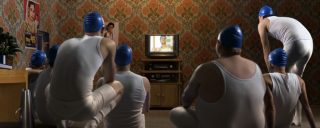
Douwe Dijkstra returns to BIEFF with his latest award-winning movie, Supporting Film. A love (and hate) letter to cinema, Dijkstra’s clever and inventive film explores the fussy relationship between you, the viewer, and cinema. Be it communal or solitary, the personal experience of watching films is scrutinized by spectators of all ages, whose recorded testimonies become in Dijkstra’s illustrative, animating hands, individual worlds of artisanal wonder and childlike exuberance. From the opening credits to the closing scrawl and everything in-between, individual idiosyncrasies clash and bond with film language in a celebration of cinema and its power to suspend our disbelief. (Andrei Tănăsescu, BIEFF)
Directed by: 
GUIDO HENDRIKX
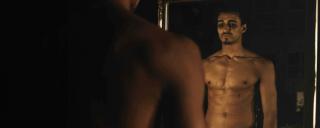
Paedophilia - a taboo that elicits immediate and unshaken aversion, but what if you were the one afflicted by it? Guido Hendrikx’s Among Us takes us through the confessionals of three highly-educated, closeted pedophiles, as they describe their history of discovery, repression and (impossible?) reconciliation with this affliction. Hendrikx captures the poetic bliss and dizzying confusion of the three subjects’ self-confessed trigger of visualization by focusing on the black-and-white cinematography’s greyscale palette. Never exploitative or sensationalistic in dealing with the unsettling dimension of its subject, Among Us operates as an non-judgemental platform for the avowal of repression’s life-long trauma. (Andrei Tănăsescu, BIEFF)
Directed by: 
METAHAVEN
In Information Skies images come before the Word that creates the image. A young couple wearing VR headsets retreat into a forest. A convoluted voice over combines splinters of different thoughts and realities. Visuals that echo the early years of the PC, oneiric live footage, abstract animations and anime-style avatars challenge the archaic notion of reality as being rooted in materiality. In the era of experiential technology, the weight of data alters the understanding of the world around us. With our perception pushed to the limit, where truth and belief are interchangeable, the concept of reality is rendered obsolete. (Diana Mereoiu, BIEFF 2018)
Directed by: 
SEBASTIAN MULDER
We need nature - the urban society firmly declares. As a result, nature is everywhere: the dentist's waiting room is a palm beach (wallpaper), the concrete balcony is green with grass (plastic) and there is a rainforest in the conference room (wallpaper again). It's copyrighted material, of course, but who will question whether the author and first owner, i.e. Nature itself, has given permission of use? Sebastian Mulder skillfully juxtaposes visuals of luxurious nature (static or moving) over dull concrete-and-steel urban images until it becomes difficult to tell the imitations from the real thing. Although the author claims that the conclusion is left to the viewer to draw, one cannot refrain from wondering nonsequitously whether the fake plants will die when one stops pretending to water them. (Adina Marin, BIEFF 2018)
Directed by: 
YAEL BARTANA
Private belongings are material testimonies of personal histories, which evoke feelings, thoughts and ideas connected to past experiences. In the context of war and survival, such objects become both comforting and hurtful signifiers of a world that has been lost, or is no longer accessible. In many cases, they are kept and cherished, even achieving a certain degree of sanctity, while also operating as a continuous reminder of the devastating past. Yael Bartana’s video Tashlikh (Cast Off) serves as a platform for both perpetrators and survivors of genocides or ethnic persecutions to confront their personal, material links to the horrors. (Berlinale Forum Expanded)
Directed by: 
SEBASTIAN DIAZ MORALES
Guided by Jean Baudrillard’s notion that reality is a construct and the world has disappeared behind its own representation, The Lost Object focuses on the objects located in a film studio set and the film crew who film them. The absence of diegetic sound, the intentionally odd soundtrack as well as the use of extremely slow camera movements (slowed down even more in editing), make the set itself and reality of the shooting process (fictionalized by being present in the film) appear equally strange, distant and artificial. Hence, Sebastian Diaz Morales’ work reflects both on its own fictionality and on that of the world beyond it. The viewer is left with the challenge to make sense of the glass cubes recurring in the film. (Ioana Florescu, BIEFF 2018)
Directed by: 
KATARINA ZDJELAR
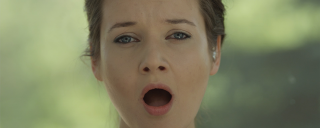
Oscillating between sound, silence, words and music, AAA (Mein Herz) shows a woman (with piercing blue eyes) simultaneously performing four compositions in a single shot. The video thus confronts us with a sort of reverse TV channel surfing, the abrupt  shifts between the individual compositions and sound registers being achieved not necessarily by means of a mechanical interruption, but through the protagonist’s impressive mastering of her facial expression and vocal cords. AAA (Mein Herz) manages to create a polyphonic composition, allowing each of the individual compositions it encompasses to preserve its inherent rhythm. Katarina Zdjelar’s five minute long video work ultimately goes to show that perfectly controlled acting and shifts in soundtrack can enable multiple temporalities to coexist and collide in a single shot. (Ioana Florescu, BIEFF 2018)
Directed by: 
belit sağ
Chubby children, the so-called Putti, are gathered around the representation of a slit tongue, hitting it with wooden hammers. This half-millenium old engraving symbolizes the punishment of freedom of speech and opens the way for Ayhan and Me’s rich meditation on censorship, an alarming issue in present day Turkey. belit sağ embeds the story of the censorship applied to this very project into a far-reaching enquiry on the ethics of representation. Alternating between documentating the repeated rejection of the project and the compelling opinions of famous thinkers about the freedom of expression Ayhan and Me progressively develops into a rich essay on the power of images and, implicitly, on the power and responsibilities of those who control them. (Ioana Florescu, BIEFF 2018)
Directed by: 
JOOST REKVELD
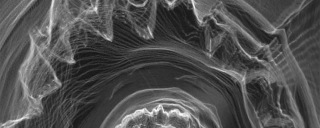
Black and white renditions of electromagnetic waves look like the ocean as seen through a kaleidoscope and then proceed to take on the shape of a spinning wheel as we start hearing  what seems to be the sound of motorcycle passing us by. There are endless possibilities for what one may believe to discern on the screen while watching the abstract images of Joost Rekveld’s #67. The Dutch artist reprises the theme of the intricate relationship between art, science and human nature in this analog HD video work centered on the concept of 'reafference', a term that refers to the perceptual changes and sensory stimulation caused by movements of the body. The work’s exploration of the fascinating patterns science delivers in its investigation of the human body develops itself the capacity to stimulate visual pleasure. (Ioana Florescu, BIEFF 2018)
Directed by: 
GIOVANNI GIARETTA
A sailor dreams of a homeland he's never had and keeps shaping it day after day in his imagination. Inspired by Fernado Pessoa’s drama The Mariner, The Sailor reflects on the creation of its own story and the need to use an invented language to express it. In Giovanni Giaretta’s film, image, voice-over and subtitles deliberately fail to syncronize. The links between them are kept wonderfully ambiguous. Landscape stills are slightly abstracted by colour filters; a female voice speaks in Na'vi (the language invented for the film Avatar), and the subtitles muse on the relation between images, words and phantasy. Same as its main character who can no longer distinguish reality from yearning, The Sailor creates an intermedial realm, unwilling to obliterate the abundance of aesthetic and narrative possibilities by putting an end to the story. (Ioana Florescu, BIEFF 2018)
Directed by: 
JUDITH WESTERVELD
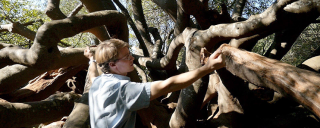
The remains of a huge hedge of wild almond trees now growing in the Cape Town Botanical Garden serve in Judith Westerveld’s film as key element in understanding the history of Dutch colonialism in South Africa. The trees were planted in 1659 by Dutch Commander Jan van Riebeeck with the aim of keeping out indigenous peoples who were raiding the colonists' settlements. By mingling a botanical account on almond trees with the opinions of a tour guide on colonialism, and with fragments from Riebeeck's diary, The Remnant builds a powerful metaphor of colonialism and its aftermaths. The almond branches are so tightly interwoven that they are forced to co-exist, same as the sufferings caused by the colonial past are bound to be remembered, since they are so deeply entwined in the South African present. (Ioana Florescu, BIEFF 2018)
Directed by: 
PAULINE CURNIER JARDIN
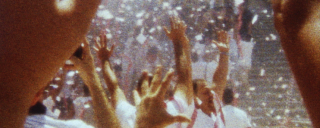
Explosion Ma Baby is a flamboyant experimental documentary which presents us with glimpses of an extravagant annual catholic procession in honor of Saint Sebastian. Using a Super 8 camera and virtuously playing with rhythm and pace, Pauline Curnier Jardin succeeds in conveying the odd sides of the event. Babies wearing garlands made of banknotes are held up by the muscular arms of their fathers, massive amounts of yellow and red confetti erupt from the cathedral’s windows and an ecstatic crowd is screaming and singing. Just like the ritual is an act in which ancient beliefs meet the exuberant present, the film itself becomes the place where the distant and more recent past collide and merge into a singular unfolding of screaming colors and sights. (Ioana Florescu, BIEFF 2018)
Directed by: 
GIANNI GROT
Gianni Grot's proclaimed aim to put hip hop on the map as a physical form of theatre materializes brilliantly in Farm of Memories, a fluid tale moving back and forth between the conscious and the unconscious, and populated by visions likely to have been unleashed by the contents of a syringe injected in the vein. A destitute young man hip-hops his way around a derelict warehouse as he tries to put together memories of his childhood or of more recent years. The emotionally charged choreography creates a touching portrait of a man longing for love and security and struggling to get near the people in his life who are supposed to offer them. But they are nothing more than chimerical apparitions and, as in nighmares, they would remain out of reach and leave  him face his demons alone. (Adina Marin, BIEFF)
Directed by: 
RUBEN VAN LEER
Digital art, dance and physics blend to create a rumination on the philosophical mysteries swirling around in our universe in a film that touches on love, philosophy and the nature of life. Filmed on location in Switzerland at CERN (European Organization for Nuclear Research) - home of The Large Hadron Collider, the world's largest and most powerful particle collider, the largest experimental facility ever built, and the largest single machine in the world – Symmetry follows a researcher working passionately on the theory of everything and the smallest particle. Ruben van Leer skilfully utilises a unique interplay of choreography and sound to express the two sides of our understanding, one rational, the other emotional. The scientist's routine is interrupted by the voice of soprano Claron McFadden, which eventually transports him to an interior world, as an expression of how our drive for rational knowledge of the universe is rooted in a deeper, more emotional desire inside ourselves. (Hyperallergic.com)