Home

LIMA

    You are here

    • You are here:
    • Home > LIMA

Directed by: 
NINA YUEN
An intimate space where the highly personal note fuses with the general human condition is created by Nina Yuen in Raymond, allegedly a monologue of the artist's father, in fact an indirect account of her own family background. The visually striking narrative moves freely and playfully from calculations of the most curious sorts, such as the total number of miles driven from their home to her school or the equivalent in calories of the quantity of fruit the father has harvested during seventeen years, to reminiscences of his childhood, and memories of him as a young father and of her as a baby. At some point, the artist ingeniously weaves deep subjects into the fabric, like the origins of the universe, mortality and the passage of time, with captivating effect, creating a tender and enchanting personal discourse on the spiritual and emotional baggage bestowed on her. (Adina Marin, BIEFF)
Directed by: 
DOUWE DIJKSTRA
Douwe Dijkstra returns to BIEFF with his latest award-winning movie, Supporting Film. A love (and hate) letter to cinema, Dijkstra’s clever and inventive film explores the fussy relationship between you, the viewer, and cinema. Be it communal or solitary, the personal experience of watching films is scrutinized by spectators of all ages, whose recorded testimonies become in Dijkstra’s illustrative, animating hands, individual worlds of artisanal wonder and childlike exuberance. From the opening credits to the closing scrawl and everything in-between, individual idiosyncrasies clash and bond with film language in a celebration of cinema and its power to suspend our disbelief. (Andrei Tănăsescu, BIEFF)
Directed by: 
MARTIJN VELDHOEN
In an attempt to plot his own existence against the coordinates 'time', 'place' and family history, Martijn Veldhoen turns his camera on his mother's life story in a unique cinematic experiment. Time and Place, a Talk with My Mom retraces fifty years in the life of Veldhoen's mother. She fell in love with his father, they had four children, then a painful separation followed and the wearisome years as a single mother of four. Beyond reminiscences of her personal story, we witness the turbulent cultural and social changes of the sixties, seventies, and eighties. The recorded material being insufficient, Martijn Veldhoen masterfully employs original visual reconstructions to create a personal and affectionate narrative. (Adina Marin, BIEFF 2016)
Directed by: 
SEBASTIAN DIAZ MORALES
Guided by Jean Baudrillard’s notion that reality is a construct and the world has disappeared behind its own representation, The Lost Object focuses on the objects located in a film studio set and the film crew who film them. The absence of diegetic sound, the intentionally odd soundtrack as well as the use of extremely slow camera movements (slowed down even more in editing), make the set itself and reality of the shooting process (fictionalized by being present in the film) appear equally strange, distant and artificial. Hence, Sebastian Diaz Morales’ work reflects both on its own fictionality and on that of the world beyond it. The viewer is left with the challenge to make sense of the glass cubes recurring in the film. (Ioana Florescu, BIEFF 2018)
Directed by: 
belit sağ
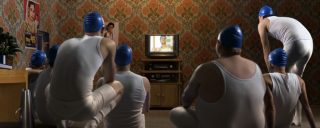
Chubby children, the so-called Putti, are gathered around the representation of a slit tongue, hitting it with wooden hammers. This half-millenium old engraving symbolizes the punishment of freedom of speech and opens the way for Ayhan and Me’s rich meditation on censorship, an alarming issue in present day Turkey. belit sağ embeds the story of the censorship applied to this very project into a far-reaching enquiry on the ethics of representation. Alternating between documentating the repeated rejection of the project and the compelling opinions of famous thinkers about the freedom of expression Ayhan and Me progressively develops into a rich essay on the power of images and, implicitly, on the power and responsibilities of those who control them. (Ioana Florescu, BIEFF 2018)
Directed by: 
ROY VILLEVOYE & JAN DIETVORST
Documenting the production - in a Dutch studio - of a lifelike statue portraying a white, middle-aged man and then moving somehow unexpectedly to interviews on location with Asmat people of Papua New Guinea, The Double deals with the process of fabrication - of the individual and of its representation - in its double meaning. While we witness the disturbingly accurate physical construction of the statue, voice-overs offer divergent narratives regarding the identity and the personality of its muse. Through their various degrees of fabrication, rather than revealing, these sometimes contradicting perspectives preserve the mystery around who this man really was. The Double thus questions the very possibility of actually ever grasping the true essence of a human being, therefore inquiring in an ingenious way into the relationship between cultures, between us and them, as part of the artists’ longtime interest in post-colonialism. (Ioana Florescu, BIEFF 2017)
Directed by: 
JOOST REKVELD
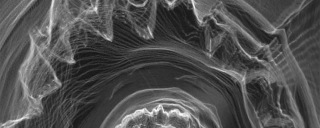
Black and white renditions of electromagnetic waves look like the ocean as seen through a kaleidoscope and then proceed to take on the shape of a spinning wheel as we start hearing  what seems to be the sound of motorcycle passing us by. There are endless possibilities for what one may believe to discern on the screen while watching the abstract images of Joost Rekveld’s #67. The Dutch artist reprises the theme of the intricate relationship between art, science and human nature in this analog HD video work centered on the concept of 'reafference', a term that refers to the perceptual changes and sensory stimulation caused by movements of the body. The work’s exploration of the fascinating patterns science delivers in its investigation of the human body develops itself the capacity to stimulate visual pleasure. (Ioana Florescu, BIEFF 2018)
Directed by: 
MELANIE BONAJO
Screened at the International Film Festival Rotterdam, Night Soil – Economy of Love portrays “a Brooklyn-based movement of female sex workers, regarding their work as a way for women to reclaim power in a male-dominated pleasure zone; their mission being to rearrange sexual conventions and ideas about intimacy itself. Vivid imagery is accompanied by a spoken score, revealing Bonajo’s vision on contemporary spirituality and expectations surrounding gender roles, by playful, sensual, and feminist-driven means. (…) Bonajo questions the complex relationships that exist within and without the natural world, challenging the traditional notions that divide nature, people, and technology.” (Galerie AKINCI)
Directed by: 
GIOVANNI GIARETTA
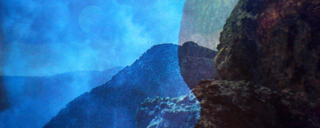
A sailor dreams of a homeland he's never had and keeps shaping it day after day in his imagination. Inspired by Fernado Pessoa’s drama The Mariner, The Sailor reflects on the creation of its own story and the need to use an invented language to express it. In Giovanni Giaretta’s film, image, voice-over and subtitles deliberately fail to syncronize. The links between them are kept wonderfully ambiguous. Landscape stills are slightly abstracted by colour filters; a female voice speaks in Na'vi (the language invented for the film Avatar), and the subtitles muse on the relation between images, words and phantasy. Same as its main character who can no longer distinguish reality from yearning, The Sailor creates an intermedial realm, unwilling to obliterate the abundance of aesthetic and narrative possibilities by putting an end to the story. (Ioana Florescu, BIEFF 2018)
Directed by: 
JUDITH WESTERVELD
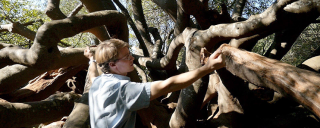
The remains of a huge hedge of wild almond trees now growing in the Cape Town Botanical Garden serve in Judith Westerveld’s film as key element in understanding the history of Dutch colonialism in South Africa. The trees were planted in 1659 by Dutch Commander Jan van Riebeeck with the aim of keeping out indigenous peoples who were raiding the colonists' settlements. By mingling a botanical account on almond trees with the opinions of a tour guide on colonialism, and with fragments from Riebeeck's diary, The Remnant builds a powerful metaphor of colonialism and its aftermaths. The almond branches are so tightly interwoven that they are forced to co-exist, same as the sufferings caused by the colonial past are bound to be remembered, since they are so deeply entwined in the South African present. (Ioana Florescu, BIEFF 2018)
Directed by: 
DOUWE DIJKSTRA
In DÉMONTABLE, our domestic space turns into a world reminiscent of Gulliver’s Travels, invaded by miniature projections of the outside world.A funny, playful film on the absurd relationship between daily life and global news. The level of media saturation we’re bombarded with creates an absurd distortion and distance between our daily routine and current affairs. Démontable explores this bizarre melange of realities by throwing the two worlds together: attack helicopters shred a newspaper, while a dinner plate suffers a drone strike. They’re a series of attempts to try and understand our world better by playing with its violent protagonists. (Douwe Dijkstra)