
- You are here: Acasă > DIARY FILMS: The Intimacy of Politics and the Politics of Intimacy – Special Program IDFA Paradocs
Sunteți aici
The prestigious IDFA International Documentary Film Festival Amsterdam comes back to BIEFF with a deeply moving and insightful theme program: DIARY FILMS: The Intimacy of Politics and the Politics of Intimacy, screened with the kind support of the Rule of Law Program South-East Europe of Konrad-Adenauer-Stiftung.
Annually, over 300 documentaries are screened at IDFA. David Maysles, Raymond Depardon, Werner Herzog and Ulrich Seidl are just a few of the directors whose documentaries premiered in Amsterdam. IDFA presents at BIEFF its section dedicated to experimental documentary, PARADOCS, which showcases works outside the traditional documentary aesthetics, at the border between cinema and visual art, and authors who explore new artistic ways to do justice to the complexity of reality.
Curated by Mr. Joost Daamen (the programmer of the PARADOCS section), the DIARY FILMS theme program goes beyond the frame of traditional documentary filmmaking, on the borders between film and art, truth and fiction, narrative and conceptual. Exploring the complex tensions and connections between private lives and political contexts, the selected works investigate the various nuances of subjectivity that affect the way we experience and implicitly capture reality, and further create our memories of it.
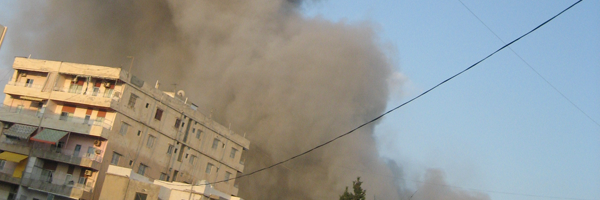
Armed with a Krasnogorsk 3 (a wind-up camera from the Soviet era), a few 16mm reels and a crack pipe, Wael Nouredinne travels from Paris to his native country to save Beirut. The film he made, JULY TRIP, is as raw, chaotic and ugly as the war it depicts. Nouredinne captures a country devastated by war. While foreign journalists in bulletproof vests and helmets are orating in front of the smouldering ruins of a recently bombed apartment building, neighbours and bystanders jump to the aid of the survivors and carry off the dead. The international media appear to have little compassion for the afflicted Lebanese civilians. Photographers swarm mutilated victims in the hope of shooting an award-winning photo. Meanwhile, Nouredinne films someone carrying an old man as the last living soul from a building and takes him on his back. Back home, the filmmaker listens to the radio, where a conceited voice says: This is all your own fault. With his friends, he escapes reality by means of different drugs. JULY TRIP is a bad trip. (IDFA PARADOCS)
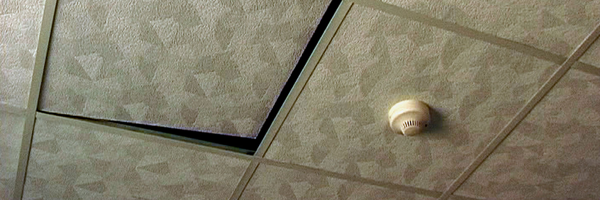
While in JULY TRIP we are given a sense of the war through the filmmaker's direct contact with the terror raging on the civil battlefield, in DIRTY PICTURES (HOTEL DIARIES 7) the conflict is moved off-camera. Screened in 2013 at Oberhausen, what at first seems to be the start of a Sci-Fi movie transforms into a handy-cam video about the contrast between the normality of the hotel room and the abnormality of the society surrounding it. Beginning in Bethlehem and ending on the other side of the Separation Wall, John Smith builds a thought-provoking sample of meta-cinema reminiscent of Chris Marker, which relates his own experience of the Israeli occupation of Palestine, brilliantly managing to trim down the monstrosity of history to human proportions. The screening is possible courtesy of LUX Artists' Moving Image.
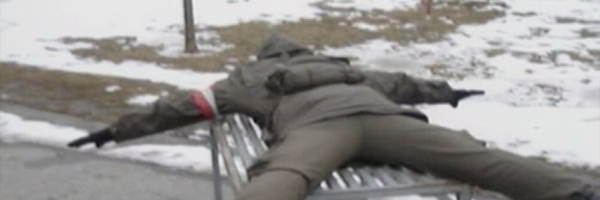
Remaining related to war, but this time getting close to those who wage it, DIARY OF SOMEONE WAITING by Judith Zdesar shows the usual non-heroic life of young soldiers guarding the border, preparing for a war that is not coming, waiting to catch immigrants that never appear, bouncing around in the snow like twelve-years old boys in a summer camp. With absurd beckettian humor, any sense of authority disappears as the soldiers film one-another. The movie is a generic description of what life itself becomes at one point: a long wait for something to happen. With a keen eye that sketches sharp observations, the film explores these soldiers’ true selves, in time of peace, of no strict authority or imminent danger, when they have to make up their own minds on who and how to be. The screening is possible courtesy of Sixpackfilm Austria.
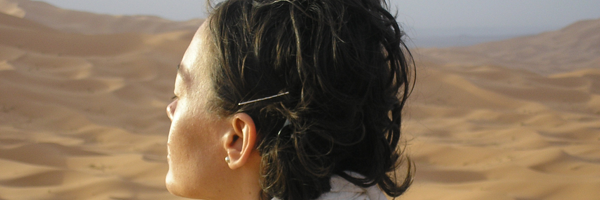
Going deeper into the private sphere, LIMITS 1ST PERSON by León Siminiani deals with how subjectivity influences the way we perceive a certain experience and, at meta-cinematic level, with how an image can be read differently depending on the physical or emotional view point. “A tiny spot in the desert turns out to be a woman. The camera moves and a voice-over explains what we are seeing. Was this footage recorded by accident, or did the woman know she was being filmed? Using clever but extremely simple means, LIMITS 1ST PERSON plays with the ambivalent meaning of images. The filmmaker manages to completely invert the significance of the images not once, but twice. Where are the boundaries of the viewer’s perspective, of the first person, as the title suggests? It appears they are all over the place. The viewer can think he knows what he is seeing, but a smart filmmaker takes that viewer by the hand and determines his place in the world like a god. If a mise-en-scène as apparently straightforward as a woman in a desert can so enthrall us, then just how powerful is the art of film?” (IDFA PARADOCS)
The 5th edition of Bucharest International Experimental Film Festival BIEFF will take place between December 10th–14th, 2014, at CinemaPRO and Elvira Popescu Cinema.
BIEFF is honoured and grateful to receive support and inspiration from its partners: Quinzaine des Réalisateurs Cannes, Berlinale Forum Expanded, International Film Festival Rotterdam, Oberhausen Film Festival, IDFA Amsterdam Paradocs, Centre Pompidou, Le Fresnoy - Studio National des Arts Contemporains, CINEDANS - Dance on Screen Festival Amsterdam, Tampere Film Festival, Sixpackfilm Austria and EYE Film Institute Netherlands.
BIEFF would not possible without the support of the Romanian National Cinema Centre, the National University of Theatre and Film Bucharest, the National University of Arts Bucharest, the Romanian Filmmakers' Union UCIN, the Romanian Cultural Institute, the French Institute in Bucharest, the Austrian Cultural Forum, Goethe-Institut Bukarest, Balassi Institute, German Films, Swiss Films and the Rule of Law Program South-East Europe of Konrad-Adenauer-Stiftung.
Media partners: 121.ro, AaRC.ro, ArtOut.ro, Asociația Paspartu, B365.ro, CalendarEvenimente.ro, Carturesti.ro, CineFan.ro, CinemaRx.ro, Designist.ro, DorDeDuca.ro, FilmReporter.ro, FilmSense.eu, GingerGroup.ro, iFestival.ro, IQads.ro, LaPunkt.ro, LiterNet.ro, OrasulM.eu, PostModern.ro, Revista Arte & Meserii, RomaniaPozitiva.ro, societatesicultura.ro, Studentie.ro, Sub25.ro, TOTB.ro, Urban Things Romania, VinSiEu.ro, WeART.ro, Ziarul Metropolis.