International Competition: Embracing the Female Gaze
Curatorial presentation by Diana Mereoiu
Is it what we do that makes us female or male, or do we do certain things because we are female, respectively male? Judith Butler famously delineated behaviour from gender, thus unveiling the extent to which our constructed notions of sex and gender (and thus to a certain degree of identity) have become unconscious, almost instinctual mental connections. The competition program Embracing the Female Gaze follows in the logic of Butler’s thinking, in that it deconstructs and scrutinizes the relationship between word, image and meaning. By analysing cinematic tropes, it makes the (chiefly masculine) language of cinema apparent, thus laying the possibility for new associations to arise. With attention and wit, the films in this segment understand that for our genuine embracing of new connotations, it is not sufficient to merely lay down new words, but it is necessary to bridge the distance between spectator and film. When the eye that sees and what is being seen become one, then novel ways of seeing can arise altogether.
Yann Gonzalez turns narrative tropes on their head in Islands. He starts with the typical horror genre in which sexual desire is being punished by a monstruos character. In a meta-cinematic turn, film turns from foe to friend, a friend through which liberated fantasies birth and enforce one another. The director explores the whole spectrum of carnal and filmic pleasures: of watching, of inciting, of living the fantasy on your own, or becoming part of the fantasy. Permeating the limits between spectacle and spectator, he leaves room for real exploration of sexuality, in a space equally conscious as it is subconscious, where desire is separated from rules, and masculinity and femininity shape each other.
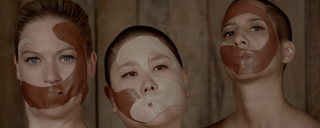
Horse Boobs furthers the exploration of representation, while also inching closer to a minimizing of distances between the eyes that see, and that which is seen: the gaze´s object and subject become one. Every shot culminates in desire and fantasy. Every close-up deployed like a fetish. The wonderfully confusing and beguiling visual worlds drafted by Katrina Daschner close the five protagonists climbing doggedly up through a snowstorm, further up and out, beyond the picture. The filmmaker “masterfully succeeds in staging the ruptures and irritations that are so essential for showing and wanting, with a subtle humour and grandiose human and non-human actors”. (Christiane Erharter)
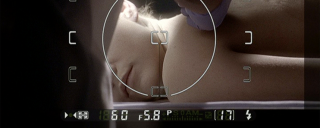
What Happened to Her deconstructs the usual way of “seeing” through a forensic exploration of our cultural obsession with images of the dead woman on-screen. Interspersing found footage from films and police procedural television shows and one actor’s experience of playing the part of a corpse, the film offers a meditative critique on the trope of the dead female body. The visual narrative of the genre, one reinforced through its intense and pervasive repetition, is revealed as a highly structured pageant. Concurrently, the experience of physical invasion and exploitation voiced by the actor pierce the fabric of the screened fantasy. The result is recurring and magnetic film cliché laid bare. (Kristy Guevara-Flanagan)
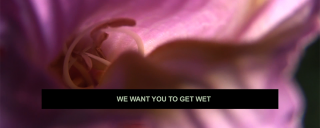
Into All That Is Here goes on to deconstruct “basic human experiences through a combination of noise, imagery, and words”, as visual artist Laure Prouvost herself states in an interview for Sleek Magazine. “I wanted to explore ideas of pleasure and anxiety. There was a lot of metamorphosis in this piece. Suddenly you are digging into this hole, and then assuming the view of an insect in a cocoon that comes out and wants to swallow everything it sees, and then slowly dies, consumed by consuming. It’s a comment on humanity and the way we consume images.”
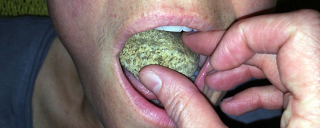
Utilizing and exploring archetypes, Strangely Ordinary This Devotion proposes a visceral exploration of feral domesticity, queer desire, and fantasy in a world under the threat of climate change. The film offers a radical approach to collaboration and the conception of family. The two female directors collect and arrange images and moments that are at once peculiar and banal, precious and disturbing, creating resonance and contrast through experimental modes of storytelling. (Dani Leventhal, Sheilah Wilson)
Yann Gonzalez turns narrative tropes on their head in Islands. He starts with the typical horror genre in which sexual desire is being punished by a monstruos character. In a meta-cinematic turn, film turns from foe to friend, a friend through which liberated fantasies birth and enforce one another. The director explores the whole spectrum of carnal and filmic pleasures: of watching, of inciting, of living the fantasy on your own, or becoming part of the fantasy. Permeating the limits between spectacle and spectator, he leaves room for real exploration of sexuality, in a space equally conscious as it is subconscious, where desire is separated from rules, and masculinity and femininity shape each other.
Horse Boobs furthers the exploration of representation, while also inching closer to a minimizing of distances between the eyes that see, and that which is seen: the gaze´s object and subject become one. Every shot culminates in desire and fantasy. Every close-up deployed like a fetish. The wonderfully confusing and beguiling visual worlds drafted by Katrina Daschner close the five protagonists climbing doggedly up through a snowstorm, further up and out, beyond the picture. The filmmaker “masterfully succeeds in staging the ruptures and irritations that are so essential for showing and wanting, with a subtle humour and grandiose human and non-human actors”. (Christiane Erharter)
What Happened to Her deconstructs the usual way of “seeing” through a forensic exploration of our cultural obsession with images of the dead woman on-screen. Interspersing found footage from films and police procedural television shows and one actor’s experience of playing the part of a corpse, the film offers a meditative critique on the trope of the dead female body. The visual narrative of the genre, one reinforced through its intense and pervasive repetition, is revealed as a highly structured pageant. Concurrently, the experience of physical invasion and exploitation voiced by the actor pierce the fabric of the screened fantasy. The result is recurring and magnetic film cliché laid bare. (Kristy Guevara-Flanagan)
Into All That Is Here goes on to deconstruct “basic human experiences through a combination of noise, imagery, and words”, as visual artist Laure Prouvost herself states in an interview for Sleek Magazine. “I wanted to explore ideas of pleasure and anxiety. There was a lot of metamorphosis in this piece. Suddenly you are digging into this hole, and then assuming the view of an insect in a cocoon that comes out and wants to swallow everything it sees, and then slowly dies, consumed by consuming. It’s a comment on humanity and the way we consume images.”
Utilizing and exploring archetypes, Strangely Ordinary This Devotion proposes a visceral exploration of feral domesticity, queer desire, and fantasy in a world under the threat of climate change. The film offers a radical approach to collaboration and the conception of family. The two female directors collect and arrange images and moments that are at once peculiar and banal, precious and disturbing, creating resonance and contrast through experimental modes of storytelling. (Dani Leventhal, Sheilah Wilson)