Directed by:
GUY MADDIN, EVAN JOHNSON, GALEN JOHNSON
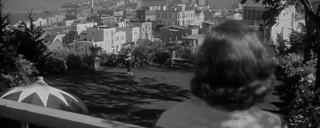
The prologue to The Green Fog shows a dial being turned from “Talk” to “Listen”. In a studio cinema, a man in handcuffs is held at gunpoint as he watches the images on the screen. A map can be seen, with a finger pointing to San Francisco. Reporters stand in front of a building, poised to deliver news by loudspeaker; the public wait in fear. The Golden Gate Bridge appears, bathed in green light; a storm rises, the steep streets of the city are entirely deserted. The structure of this film by Guy Maddin, Evan Johnson and Galen Johnson pays homage to Hitchcock’s Vertigo: a dizzying assemblage of film and TV images both familiar and unknown, all from the Bay Area. From this trove of found material, they have created a cinematic fantasy that pulls the viewer in and never lets go. (Berlinale 2018)
“As befits the Maddin imagination, The Green Fog is constructed with an eye for the bizarre and the joyously perverse. Discontinuity is sometimes wildly heightened, in classic Surrealist mode... This is an exuberant, celebratory, often marvelously funny piece of work; it’s also strangely melancholic and mesmerizingly uncanny.” (Jonathan Romney, Film Comment)
“At this stage in his career, Maddin has mastered a particular form of filmmaking, and has garnered significant approbation for it. But instead of simply generating more of the same, his newest work finds him taking on new collaborators, trying radically new things, and broadening his formal repertoire. In every way, The Green Fog is the work of a bold, forward-thinking artist.” (Michael Sicinski, Letterboxd)
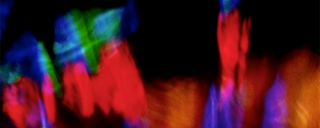
“More than a literal fusing of the city's famous atmospheric conditions with the green hues of Vertigo, this fog takes on its own mind-bending significance, pushing the film toward the fever-dream territory of Maddin's other films. Even working with some of the most mainstream ingredients one could possibly find (including, in a funny moment, an NSYNC video) and one of the most familiar settings on earth, Guy Maddin knows how to make things strange.” (John DeFore, The Hollywood Reporter)
“Somehow, not withstanding its fragmented diversity of images, and despite the fact that it features very little dialogue..., The Green Fog remains intelligible and remarkably coherent, even as the narrative lines expand, bend and contort to include sundry digressions... The film, in essence, is a brilliant exercise in meta-narrative, which raises questions galore about reality and representation, time and space, genre and gender, individual and urban identity, cinematic suture and casting etc.” (Geoff Andrew, Sight & Sound)