Home

Switzerland

    You are here

    • You are here:
    • Home > Switzerland
Directed by: 
GABRIEL ABRANTES
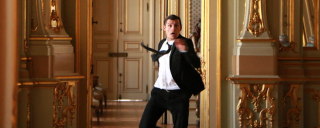
Commissioned by IndieLisboa for the omnibus Here in Lisbon (shared with films from Marie Losier, Dominga Sotomayor and Denis Côté) Gabriel Abrantes' Freud and Friends is a raucous cavalcade of parodies. Abrantes’ film is set up as a TV show, bearing the eponymous title, narrated by famous documentarian Herner Werzog as he goes on location to a laboratory, observing guinea-pig Abrantes who is volunteering for his scientist-girlfriend’s mind-reading experiments. Always the mischievous, self-deprecating filmmaker, Abrantes uses this opportunity to unleash a barrage of subconscious fears and desires (ranging from the cerebral to the gaseous), complete with commercial breaks (look out for the truly Freudian Woody Allen impersonation!). Beneath it all lie incisive stabs at media’s culture of beauty and sex, as well as the eternal fear of commitment. (Andrei Tănăsescu, BIEFF)
Directed by: 
FABIAN KAISER
Winner of the Vienna Short Film Award, Fabian Kaiser’s The Breath offers an entrancing, original look at the fortitude of society’s unsung hero of safety, the firefighter. Heavy on atmosphere and free of dialogue, Kaiser’s hybrid documentary observes a group of firemen as they go about their exercise drills, decked out in recognizable orange suits and hermetically sealed oxygen helmets. Their mechanical movement, assured in its steps and slowed by the weight of their gear, expresses steadfast confidence, but the eyes of their superior hides human fallibility. When it’s his turn to don the mask, he proceeds down a labyrinthian passageway, on a rite of passage into fear and the unknown. With bated breath we witness his transcendence and inevitable return to our material world, cleansing himself for the next day to come. (Andrei Tănăsescu, BIEFF)
Directed by: 
CARMEN JAQUIER
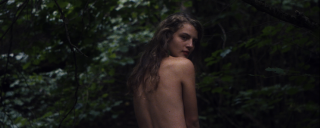
World premiered at Locarno Film Festival 2016, the short film The River Under the Tongue takes us on an intimate journey and makes us witness (or partake in) the infringement of one’s hidden thoughts and desires. After reading his elder daughter’s diary, one mother, feeling to what extend they have drifted apart, takes her and her younger daughter for a walk in the forest. But above the scenic background, above the pictures that linger on the elder daughter’s lips, skin and nymph-like hair, floats the erotic poetry of her diary’s entries. After all our senses are engaged, the perversity of infringing on one’s intimacy is belittled by the philosophic and poetic sensuality. (Andreea Udrea, BIEFF)
Directed by: 
PAULINE JULIER
The high view of a city at night, fireworks sparkling in the distance, a party that just finished and sounds like a whisper in the empty silence. A meditative voice-over talks about the postmodern generation as of a bunch of kids who wrecked everything in the wake of their huge party. They are waiting and secretly craving for their parents to restore order. But the parents are not returning. Inspired by a quote from David Foster Wallace, comparing cultural to familial stability, AFTER unveils the insecurities and anxieties of the ones who soon have to become “parents” of a new generation while they themselves are still looking for structure and for balance. (Bianca Bănică, BIEFF)
Directed by: 
ANTONI PINENT
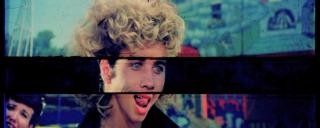
A self-described “handmade décollage”, G/R/E/A/S/E takes the famous rock'n'roll musical comedy Grease as source material. Antoni Pinent literally puts the main characters under his caméra-stylo's knife: working directly with prints, the filmmaker isolates and magnifies the pop(ular) imagery and dialogue of the cult film by splitting and splicing frames into a physical and formal cinematic remix that becomes a pure delight for the senses. Cultural signifiers deconstructed, the film’s campy, manufactured pop-cinema look is taken to the extreme, letting the viewer know that its cross-cultural resonance (and dominance) have just begun. (Andrei Tănăsescu, BIEFF)
Directed by: 
JOERG HURSCHLER
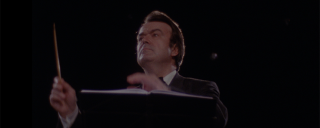
A sincere confessional, ME, NOBODY AND I is a playful rite of passage into adulthood (or is it manhood?) that is sure to resonate on multiple levels with viewers. Via voice-over, Hurschler recalls and confronts his childhood idols and ideals. By literally becoming the macho wrestler, the mysterious cowboy of the Wild West or the alluring action figure (here David Hasselhoff!), Hurschler figuratively employs their specific genre stylistics to make them come alive. In the process, archetypes of TV and cinema are collaged together as the director’s existential conflict lures the viewer towards its victorious conclusion of self-realization. (Andrei Tănăsescu, BIEFF)
Directed by: 
EDUARDO WILLIAMS, MARIANO BLATT
"Seems like a thing, / Seems like something else". These two lines of a total of one thousand that make up MARIANO BLATT's poem "No es" (It's not) might work as a clue for PARSI (which means "It seems to be"). The poem itself has been described as cumulative, with verses added continuously over the course of a lifetime. The visual images follow the same pattern and, like the words, cover virtually everything: people, landscapes, ideas, feelings. No verse or image relates to the next, and neither do they connect with each other. Through his inventive juxtaposition WILLIAMS creates a roller coaster effect, a movement both fluid and accelerated that leaves the viewer grasping for air. Same as life itself. (Adina Marin, BIEFF 2019)
Directed by: 
ANAÏS MOOG
With a slow, overwhelming rhythm, yet concealing a tempest that is ready to erupt - this is how the sea is witnessed from other shores: not as meditative and romantic space, but rather an immense border between two estranged worlds. ANAÏS MOOG alternates, through the use of sound and image, an immense unrest. The turbulent waters and the silence of the earth, the rocks. The resigned, calm voice of a woman laments the loss of a child, hiding in it a force that is equal to that of the waves breaking on the shore. The sea is seen as an omnipotent, passive, but powerful space, both necessary and despicable. MOOG relies on a strongly subjective and dreamlike universe, in which these people’s suffering is illustrated through the dreams they share with us. A kind of connection to an astral suffering. Death and sea, two boundless symbols, both haunted by loss. (Emil Vasilache, BIEFF 2020)
Directed by: 
MAHDI FLEIFEL
Radiohead, Palestine, and the question of individual power, debated during a personal overseas phone conversation between Palestinian director MAHDI FLEIFEL and an acquaintance. The slightly tense, sometimes reassuring voices discuss one of the most complex ethical issues of contemporary Germany – a country where we understand that the director lives at present – regarding Europe’s moral obligation to support Israel, and Israel’s harsh towards Palestine. Images shot on film of the director’s apartment filled with spots of sunlight coming through large windows are juxtaposed with found footage of the Palestinian struggle, putting in contract the intimate safe space with the troubled and uncertain place that the two men call “home”. (Emil Vasilache, BIEFF 2019)
Directed by: 
MAGDALENA FROGER
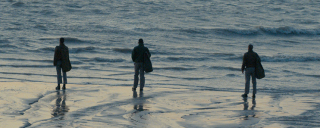
In Froger's introductory shot, an ominous fog is slowly rising above a forest. The mood is set for our meeting with Les Intranquilles, 'the restless', three young men wearing military uniforms who roam around a ghost town. They wander through a variety of landscapes: a deserted city, some rocky terrain, a forest, with a vague aim to make it to the sea, perhaps for the last time. In this rather unconventional tale of camaraderie, with little dialogue other than short personal confessions, the young men seem to be drawn together by quiet despair and a state of intranquility that pushes them towards a metaphysical search. (Teodora Leu, BIEFF 2018)
Directed by: 
LUCIEN MONOT
In order to run away from a monotonous everyday life, 63 years old Daniel found an activity which gives him a way to exist : working as an extra in movies. For ten years, he has travelled from one set to the next and put on costumes of various characters. It is the fictional side of cinema that makes this man dream and leave behind the humdrum of an ordinary life. (HEAD Genève).

Lucien Monot's Genesis (the title of the film is Daniel's stage name) is a skilful cinematic account not of the man himself, but of the meeting between a young filmmaker and someone elderly, with a mutual passion for cinema.
Directed by: 
PHILBERT AIMÉ MBABAZI SHARANGABO
I GOT MY THINGS AND LEFT is a reflection on life, death and afterlife following the death of Eric, a young Rwandese with high value of people, life and relations. He is mourned by a group of friends who spend the night remembering him and his singular ways within a conformist society. The title is the opening line of Charles Dambudzo Marechera’s 'The House of Hunger', published in 1979 and looked upon 40 years later as a prophetic novel that predicted the troubles of modern-day Zimbabwe. Like Dambudzo Marechera, Eric died young. And same as the controversial writer, he left people wondering about his creative legacy and their own paths in life. (Adina Marin, BIEFF 2019)
Directed by: 
BASIM MAGDY
A zoo în which all animals have joined the chat. Between resplendent 16mm shorts, messages from a collective super-id seep into the cracks: from „wanna go back to ur place?” and Twitteresque humor, to existentialist and quasi-apocalyptic messages. Creating tension between images of the natural world with the surrealist automatism of text algorithms which, at times, seem to be sentient, Basim Magdy fuses together two worlds that are polar opposites, thus obtaining a strange new world, in which the aberrations of online digital are laid bare in front of us. (Flavia Dima, BIEFF 2020)
Directed by: 
MAX PHILIPP SCHMID
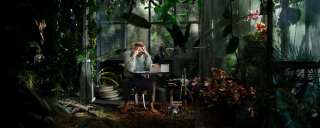
'Everything was good. Beyond the reach of all evils.' - a voice utters repeatedly and persuasively in the beginning of Max Philipp Schmid's film, hinting to a (lost) Paradise. Instead, the viewer is swept into an artificial greenhouse mimicking the Garden of Eden, where the Adam character is played by a middle-aged, middle class man leafing through a collection of index cards and occasionally reciting into a microphone quotes from The Bible, Rousseau, Der Spiegel, Hesiod, and a bunch of academics. The resulting discourse is a multi-faceted complex of ideas, retracing the history of the garden as the primordial protected place, from the literal meaning of the Persian word pairidaēza (enclosure) to the present societal tendency towards reclusion while longing for the lost paradise. (Adina Marin, BIEFF)
Directed by: 
BENNY JABERG
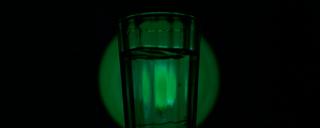
Set against visually piercing Russian landscapes, THE GREEN SERPENT explores the conflicting feelings vodka awakens, from liberating creative urges, to (self-)destructive behaviors. The interviewees’ sincere testimonies that talk about the transition from agony to ecstasy and vice versa gradually become priceless existential meditations. Initially presented as a masochistic way to escape reality, and thus to avoid spiritual search, the drink proves to be the substance which brings them the creative revelation of the soul, making it possible to achieve transcendence and reach quintessence. (Gabriela Lupu, BIEFF)