Home

Russia

    You are here

    • You are here:
    • Home > Russia
Directed by: 
LUIS NIETO
A series of psychoanalytic thoughts expressed through voice-overs accompany images of body parts reconstructing a body that has violent sexual suggestions. ALL WE NEED IS SLAVES is an editing experiment with a very precise rhythm, presenting an original concept of combining erogenous zones of the body with sense organs, building the puzzle of a Sambuca dream in which the delirium takes the lead. The collage leaves no room for spontaneous interpretation, as the images’ transformation and succession is so quick, therefore, the spectators’ ideas over the movie appear strictly in the subconscious.  (Bianca Bănică, BIEFF)
Directed by: 
SHARUNAS BARTAS
The plot, if there is any, and Bartas is not particularly keen to reveal its details, revolves around an intellectual from the city (played by Bartas himself) who takes his daughter (Bartas’s own daughter, Ina Marija Martaite) and his partner, a violinist (reallife violinist Lora Kmielliauskaite) to his country house for a summer breather. Or is it much more? [...] None of the film’s characters has a name, just to indicate how emblematic they are supposed to be, but they are all in a state of personal crisis which they are trying desperately, but not very successfully, to make sense of. Locked in tight closeups, Bartas’s characters are constantly trying to reach out to each other in their own ways, and finding it difficult either to express their feelings and their fears or to provide the advice they are expected to give. They seek someone to lean on, and find answers to questions they don’t even know how to ask. [...] Wrapped in magical images of a peaceful, calm nature disturbed only by the presence of man, this looks very much like a painful, meditative and sad reflection on life from the point of no return for a character just like the one Bartas chose to play himself. (Dan Făinaru, Screen Daily)

'Humans always doubt,' says a father to his daughter. 'Just imagine if suddenly everything (were) clear. What would you do?' What indeed? Such questions serve as a substitute for drama in Sharunas Bartas’ Peace to Us in Our Dreams, an oldschool drama in which a man, his daughter and his violinist companion openly ponder Big Themes during a country getaway. Bartas casts himself in the lead, a father who is distant from his daughter. He shows her an old homemovie in which she can be glimpsed with her mother on a merrygoround. The girl is played by Ina Marija Bartaite, Bartas’ actual daughter, and the mother by Katia Golubeva, Bartaite’s actual mother, who died in 2011 — all of which suffuses the film with a sense of loss that persists as the three living characters retreat to the country. The season is summer, but the natural lighting often suggests a wintry, twilight gray. [...] Lenser Eitvydas Doshkus captures some stunning silhouettes, and there are times in Peace to Us in Our Dreams when it’s possible to be transfixed simply by fog, blowing trees or raindrops on lapping water. (Ben Kenigsberg, Variety)
Directed by: 
ALEXEI DMITRIEV
THE SHADOW OF YOUR SMILE looks at the hidden pleasures that lurk behind and in-between the artefacts of VHS adult films. An invisible protagonist starts a video cassette. The enigmatic smile of a young girl fills the screen, in slow motion, making us imagine an unrequited love story between her and the unseen character. Yet, as the source-material begins to censor itself via its unstable image calibration, the film gets fast-forwarded by the typical impatient viewer and the supposed “love story” takes an unexpected turn. Alexei Dmitriev plays freely with the viewer’s expectations, while exploring the possibility of reshaping the semantics of the images by manipulating their sound and taking them out of context. (Andrei Tănăsescu & Diana Mereoiu, BIEFF)
Directed by: 
ALINA KOTOVA, VLADLENA SANDU
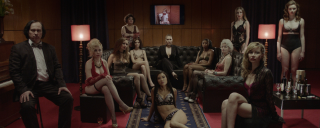
In eight tableaux, we see stages and situations from the working life of a 1993-born Russian woman. Her jobs and tasks span from doing rounds to check who is present at work to being a brothel manager. In each workspace and situation, she and the workmates around her stare at the camera while a bleak commentary provides us with details regarding the context, delivering them as a string of keywords. “Graduated - now a journalist. Suicidal depression, paranoid delirium.” A livid portrait of a young woman who constantly on the verge of unemployment, EIGHT IMAGES… evokes the country’s 780 thousand university graduates who end up accepting jobs for which they are overqualified. (Ioana Florescu, BIEFF 2019)
Directed by: 
BENNY JABERG
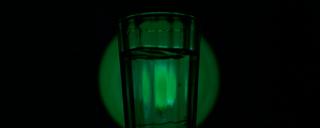
Set against visually piercing Russian landscapes, THE GREEN SERPENT explores the conflicting feelings vodka awakens, from liberating creative urges, to (self-)destructive behaviors. The interviewees’ sincere testimonies that talk about the transition from agony to ecstasy and vice versa gradually become priceless existential meditations. Initially presented as a masochistic way to escape reality, and thus to avoid spiritual search, the drink proves to be the substance which brings them the creative revelation of the soul, making it possible to achieve transcendence and reach quintessence. (Gabriela Lupu, BIEFF) 
Directed by: 
DORIAN JESPERS
SUN DOG starts out from the macro image of a Russia, which one can't fully tell if it's apocalyptic or realistic, and the zooms in onto the oftentimes Lynchian micro of a couple of lives crammed into a couple of shabby high-rise apartments. JESPERS constructs a universe seemingly frozen in an eternal nocturnal blizzard, inhabited by gopniks and babushkas who live their lives in slow-motion, where it's never really clear if the moment of disaster is about to happen, or if it's already long gone. (Flavia Dima, BIEFF 2020)