Home

Embassy of Switzerland

    You are here

    • You are here:
    • Home > Embassy of Switzerland

Directed by: 
GABRIEL ABRANTES
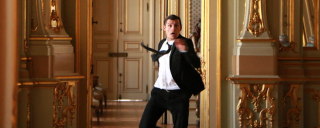
Commissioned by IndieLisboa for the omnibus Here in Lisbon (shared with films from Marie Losier, Dominga Sotomayor and Denis Côté) Gabriel Abrantes' Freud and Friends is a raucous cavalcade of parodies. Abrantes’ film is set up as a TV show, bearing the eponymous title, narrated by famous documentarian Herner Werzog as he goes on location to a laboratory, observing guinea-pig Abrantes who is volunteering for his scientist-girlfriend’s mind-reading experiments. Always the mischievous, self-deprecating filmmaker, Abrantes uses this opportunity to unleash a barrage of subconscious fears and desires (ranging from the cerebral to the gaseous), complete with commercial breaks (look out for the truly Freudian Woody Allen impersonation!). Beneath it all lie incisive stabs at media’s culture of beauty and sex, as well as the eternal fear of commitment. (Andrei Tănăsescu, BIEFF)
Directed by: 
FABIAN KAISER
Winner of the Vienna Short Film Award, Fabian Kaiser’s The Breath offers an entrancing, original look at the fortitude of society’s unsung hero of safety, the firefighter. Heavy on atmosphere and free of dialogue, Kaiser’s hybrid documentary observes a group of firemen as they go about their exercise drills, decked out in recognizable orange suits and hermetically sealed oxygen helmets. Their mechanical movement, assured in its steps and slowed by the weight of their gear, expresses steadfast confidence, but the eyes of their superior hides human fallibility. When it’s his turn to don the mask, he proceeds down a labyrinthian passageway, on a rite of passage into fear and the unknown. With bated breath we witness his transcendence and inevitable return to our material world, cleansing himself for the next day to come. (Andrei Tănăsescu, BIEFF)
Directed by: 
CARMEN JAQUIER
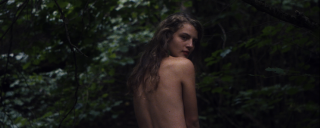
World premiered at Locarno Film Festival 2016, the short film The River Under the Tongue takes us on an intimate journey and makes us witness (or partake in) the infringement of one’s hidden thoughts and desires. After reading his elder daughter’s diary, one mother, feeling to what extend they have drifted apart, takes her and her younger daughter for a walk in the forest. But above the scenic background, above the pictures that linger on the elder daughter’s lips, skin and nymph-like hair, floats the erotic poetry of her diary’s entries. After all our senses are engaged, the perversity of infringing on one’s intimacy is belittled by the philosophic and poetic sensuality. (Andreea Udrea, BIEFF)
Directed by: 
MAGDALENA FROGER
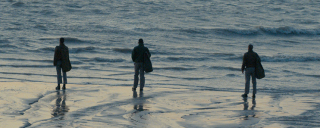
In Froger's introductory shot, an ominous fog is slowly rising above a forest. The mood is set for our meeting with Les Intranquilles, 'the restless', three young men wearing military uniforms who roam around a ghost town. They wander through a variety of landscapes: a deserted city, some rocky terrain, a forest, with a vague aim to make it to the sea, perhaps for the last time. In this rather unconventional tale of camaraderie, with little dialogue other than short personal confessions, the young men seem to be drawn together by quiet despair and a state of intranquility that pushes them towards a metaphysical search. (Teodora Leu, BIEFF 2018)
Directed by: 
LUCIEN MONOT
In order to run away from a monotonous everyday life, 63 years old Daniel found an activity which gives him a way to exist : working as an extra in movies. For ten years, he has travelled from one set to the next and put on costumes of various characters. It is the fictional side of cinema that makes this man dream and leave behind the humdrum of an ordinary life. (HEAD Genève).

Lucien Monot's Genesis (the title of the film is Daniel's stage name) is a skilful cinematic account not of the man himself, but of the meeting between a young filmmaker and someone elderly, with a mutual passion for cinema.
Directed by: 
SONJA WYSS
If Jung's theory is true and "every mother contains her daughter in herself and every daughter her mother", small wonder that a mother-daughter relationship is anything but smooth and rosy, since apart from an inherent conflict between generations there is a permanent confrontation with one's own self. With She/Her, Sonja Wyss goes deep into the anatomy of such a relationship, unwrapping layer after layer of feelings of resentment, disapproval, rebellion, and self-consciousness until she reaches a hidden core of delicate affection. Restrained movements portray a middle-aged, middle class comme il faut mother, defied by the daughter's rebellious outbursts. Eventually, her frantic dance fades into reconciliation. After all, her mother is nothing but a future version of herself. (Adina Marin, BIEFF 2017)
Directed by: 
MAX PHILIPP SCHMID
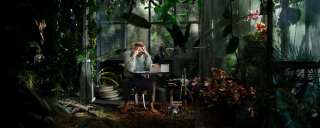
'Everything was good. Beyond the reach of all evils.' - a voice utters repeatedly and persuasively in the beginning of Max Philipp Schmid's film, hinting to a (lost) Paradise. Instead, the viewer is swept into an artificial greenhouse mimicking the Garden of Eden, where the Adam character is played by a middle-aged, middle class man leafing through a collection of index cards and occasionally reciting into a microphone quotes from The Bible, Rousseau, Der Spiegel, Hesiod, and a bunch of academics. The resulting discourse is a multi-faceted complex of ideas, retracing the history of the garden as the primordial protected place, from the literal meaning of the Persian word pairidaēza (enclosure) to the present societal tendency towards reclusion while longing for the lost paradise. (Adina Marin, BIEFF)