
- You are here: Home > UNCANNY VALLEY
You are here
Cinema Elvire Popesco -
Tuesday, March 15, 2016 - 18:00
Cinema Muzeul Țăranului -
Friday, March 18, 2016 - 20:30
Written by:
Paul Wenninger
Cast:
Raúl Maia, Jan Jakubal, Paul Wenninger
Cinematography:
Paul Wenninger
Editing:
Michael Derrossett
Sound:
Nick Hummer, Michael Moser
Production:
Films de Force Majeure, Kabinett and Co., KGP Kranzelbinder Filmproduction
Romanian Premiere
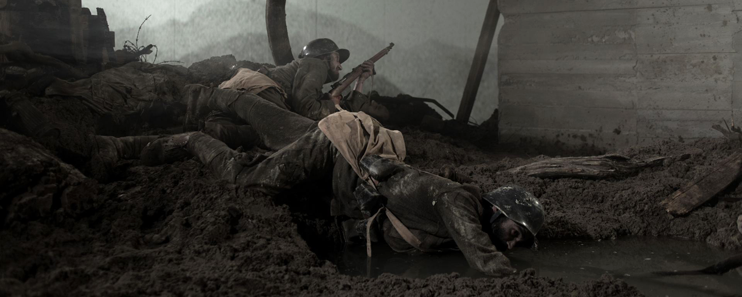
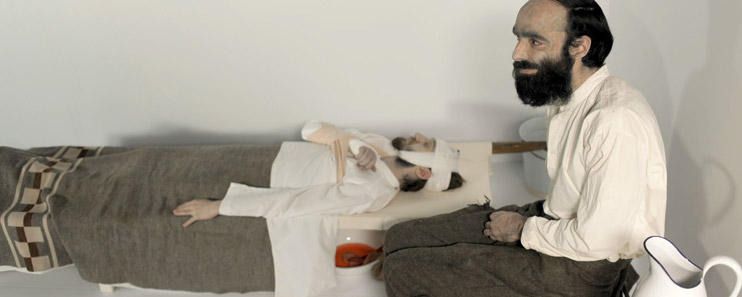
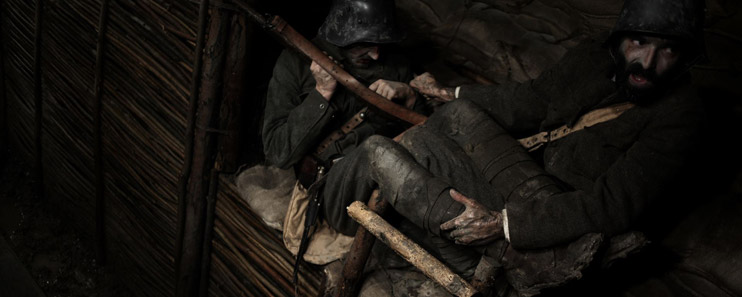
Like the flicker of silent films or the delay of memory recall, Paul Wenninger’s Uncanny Valley unravels its story of wartime trauma through the camaraderie of two lone soldiers fighting their way out of the trenches of World War I. Employing the aesthetic mechanics found in stop-motion animation, Wenninger’s real-life protagonists move as marionettes in a theatre of war that flashes at every interval with the fear and danger. Impelled by survival instincts and a balletic camerawork that transverses time and space in awe-inspiring long-takes, the two soldiers emerge out of the ruins of war, shell-shocked and spiritually defeated. Atmospheric and compelling, Uncanny Valley offers a potent statement on the inevitable abstraction of history, erasing individual experience in favour of posterity’s superficial representation. (Andrei Tănăsescu, BIEFF)
Director:
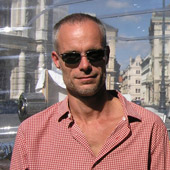
Paul Wenninger is born in 1966 in Vienna. Freelance dancer, author of choreographic pieces, and film maker with a focus on pixilation and animation. Since 1999 he is the artistic director of Kabinett ad Co., a working platform for interdisciplinary projects with a focus on the body.
Collaborations with various choreographers and companies, e.g. in France with Cie. Catherine Diverrès at Centre Choreographique National de Rennes et Bretagne. His works have been shown internationally and received several awards.
Website:
Contact:
office[at]kabinettadco[dot]at
Festivals, awards:
- Best Austrian Animation & Audience Award - One Day Animation Festival, Vienna 2015
- International Jury Mention - Anima Festival de Film d’Animation Cordoba 2015
- Annecy International Animation Festival 2015
- Uppsala International Short Film Festival 2015
- Les Sommets du Cinéma dAnimation de Montréal 2015
- Airport Animation Film Festival 2015
- ReAnimania IAFFY Yerevan 2015
Curatorial comment:
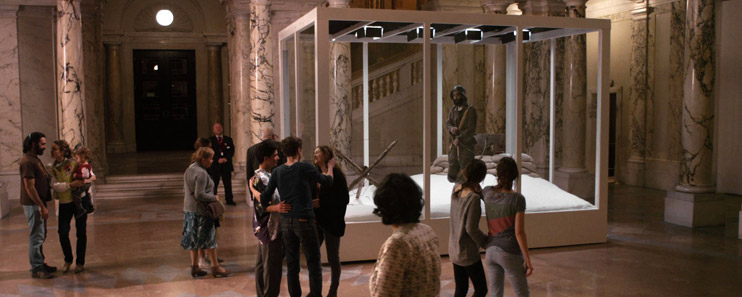
Paul Wenninger traces the arc of representational history to representation-critical parable: he straddles the Uncanny Valley with motifs from found footage material from World War I, which he connects to the actors´ performances, to bring them into the image again using techniques from animation and then, with a diorama, to land in a museum-like ambiance. What the film documents is a parable about the difficulty of making present what one wants to show: in this film, the soldiers' fear and wounds also applies to the distance, which is injured here, in order to gapingly gaze in the semblance of illusion. The stop-motion aesthetics jiggles at the seamless course of images, making the representation stutter: the body language follows the media´s staccato, which intrudes in the dance to perforate the movements, punch holes through the appearance of humanity. What is then shown is a distance, which affects us deeply, the impossibility of backing away, an iconoclastic dance. (Andreas Spiegl)
Paul Wenninger traces the arc of representational history to representation-critical parable: he straddles the Uncanny Valley with motifs from found footage material from World War I, which he connects to the actors´ performances, to bring them into the image again using techniques from animation and then, with a diorama, to land in a museum-like ambiance. What the film documents is a parable about the difficulty of making present what one wants to show: in this film, the soldiers' fear and wounds also applies to the distance, which is injured here, in order to gapingly gaze in the semblance of illusion. The stop-motion aesthetics jiggles at the seamless course of images, making the representation stutter: the body language follows the media´s staccato, which intrudes in the dance to perforate the movements, punch holes through the appearance of humanity. What is then shown is a distance, which affects us deeply, the impossibility of backing away, an iconoclastic dance. (Andreas Spiegl)