Oberhausen Film Festival: The Female Gaze

Curatorial presentation by Andrei Tănăsescu
Bucharest International Experimental Film Festival BIEFF continues its inspiring long-term collaboration with the legendary International Short Film Festival Oberhausen. With the kind support offered by German Films and Goethe-Institut Bukarest, BIEFF offers Romanian cinema lovers the chance to see some of the most intriguing works signed by female filmmakers, awarded at the 2014 edition of the Oberhausen festival - within the theme program THE FEMALE GAZE: Cinematic Confessions by Women Filmmakers.
While their connective thread transitions from the metaphysical to the tangible, the films within this program retain nonetheless a common grounding within a space that offers them a privileged position from which to view their own diegetic (sub)conscious reality. In these experiments of cinematic alterity, the viewer is afforded a level of intimacy that invites an analytical and yet emotional observation of the existential anxieties of womanhood.
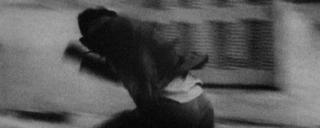
Maria Kourkouta’s lyrical portrait of Greek identity, RETURN TO AEOLUS STREET (ARTE Award - Oberhausen 2014) begins the program’s confessional by navigating through the wandering ghosts of history, longing for life’s vitality. Black and white fragments of popular Greek films are looped, superimposed and slowed down in a balletic chiaroscuro while poetic passages are narrated over melancholy piano pieces. The result is an engrossing audio-visual poem whose hypnotic gaze into a collective consciousness resuscitates its memory and reinvigorates its dormant desires.
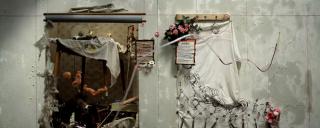
An apt companion-piece to KOURKOUTA’s film, Susann Maria Hempel’s singular narrator in her SEVEN TIMES A DAY WE COMPLAIN ABOUT OUR FATE AND AT NIGHT WE GET UP TO AVOID OUR DREAMS (Best Film Award - German Competition Oberhausen 2014) turns to look at the traumatized psyche of a victim of abuse. Fully embracing its subjective form, Hempel narrates the film’s intimate diary-entries and retreats further into the mind of her character by crafting her mise-en-scène with phantasmagorical bric-a-bracs pulled by strings. Hempel’s mesmerizing puppet-show convincingly describes the psychological and physical abuse, drawing the viewer down its downward spiral with childlike fortitude.
Bringing the program’s narrative disclosures to a seemingly more familiar territory, Helena Wittmann’s multiple award-winning film THE WILD introduces us to the ideal, peaceful picture of long-lived domesticity. In a sun-filled home, a husband waters the plants while the wife prepares their meal. Yet behind the veneer of their quiet existence, the camera glides slowly through empty rooms, revealing projections of wildlife taking over their home, their sounds striking off against the solitude of old age. The Wild’s juxtaposition of homely tranquillity with primal savagery invites the viewer to look beyond surface symbolism, coming face-to-face with the primal nature of our domesticized humanity.
Concluding the program’s introspective gaze with a true celebration of femininity, A MILLION MILES AWAY (ZONTA Award - Oberhausen 2014 - special prize celebrating female filmmakers) tackles the subject of repressed anxiety and teenage angst. This emotionally rich portrayal of feminine empowerment sees a substitute music-class teacher incapable of quelling her nervousness in front of the class. That is, until her class’ soothing vocal harmonies grant her a mature sense of self-esteem. Creating an impressive visual universe, flights of magical-realism turn the narrative into a wholly therapeutic experience. A matryoshka doll of layered insecurities and anxieties, Jennifer Reeder’s film reveals and revers the inner child, to the rhythm of heavy metal harmonies.
While their connective thread transitions from the metaphysical to the tangible, the films within this program retain nonetheless a common grounding within a space that offers them a privileged position from which to view their own diegetic (sub)conscious reality. In these experiments of cinematic alterity, the viewer is afforded a level of intimacy that invites an analytical and yet emotional observation of the existential anxieties of womanhood.
Maria Kourkouta’s lyrical portrait of Greek identity, RETURN TO AEOLUS STREET (ARTE Award - Oberhausen 2014) begins the program’s confessional by navigating through the wandering ghosts of history, longing for life’s vitality. Black and white fragments of popular Greek films are looped, superimposed and slowed down in a balletic chiaroscuro while poetic passages are narrated over melancholy piano pieces. The result is an engrossing audio-visual poem whose hypnotic gaze into a collective consciousness resuscitates its memory and reinvigorates its dormant desires.
An apt companion-piece to KOURKOUTA’s film, Susann Maria Hempel’s singular narrator in her SEVEN TIMES A DAY WE COMPLAIN ABOUT OUR FATE AND AT NIGHT WE GET UP TO AVOID OUR DREAMS (Best Film Award - German Competition Oberhausen 2014) turns to look at the traumatized psyche of a victim of abuse. Fully embracing its subjective form, Hempel narrates the film’s intimate diary-entries and retreats further into the mind of her character by crafting her mise-en-scène with phantasmagorical bric-a-bracs pulled by strings. Hempel’s mesmerizing puppet-show convincingly describes the psychological and physical abuse, drawing the viewer down its downward spiral with childlike fortitude.
Bringing the program’s narrative disclosures to a seemingly more familiar territory, Helena Wittmann’s multiple award-winning film THE WILD introduces us to the ideal, peaceful picture of long-lived domesticity. In a sun-filled home, a husband waters the plants while the wife prepares their meal. Yet behind the veneer of their quiet existence, the camera glides slowly through empty rooms, revealing projections of wildlife taking over their home, their sounds striking off against the solitude of old age. The Wild’s juxtaposition of homely tranquillity with primal savagery invites the viewer to look beyond surface symbolism, coming face-to-face with the primal nature of our domesticized humanity.
Concluding the program’s introspective gaze with a true celebration of femininity, A MILLION MILES AWAY (ZONTA Award - Oberhausen 2014 - special prize celebrating female filmmakers) tackles the subject of repressed anxiety and teenage angst. This emotionally rich portrayal of feminine empowerment sees a substitute music-class teacher incapable of quelling her nervousness in front of the class. That is, until her class’ soothing vocal harmonies grant her a mature sense of self-esteem. Creating an impressive visual universe, flights of magical-realism turn the narrative into a wholly therapeutic experience. A matryoshka doll of layered insecurities and anxieties, Jennifer Reeder’s film reveals and revers the inner child, to the rhythm of heavy metal harmonies.
International Short Film Festival Oberhausen - festival partener
At its 60th edition in 2014, the International Short Film Festival Oberhausen is one of the major international crossroads for the short form, unique in the range of forms and genres it presents to the public, and particularly well known for its spotlight on experimentation. In the course of more than five decades, filmmakers and artists ranging from Roman Polanski to Cate Shortland, from George Lucas to Pipilotti Rist, have presented their first works in Oberhausen.
The Festival organizes an International Competition, a Children’s and Youth Films and a German Competition and the MuVi Award for the best German music video as well as the NRW Competition for productions from North Rhine-Westphalia. In addition, Oberhausen is known for its strong line of thematic programs such as Provoking Reality in 2012, dedicated to the 50th anniversary of the Oberhausen Manifesto from 1962, or Flatness: Cinema after the Internet in 2013, a program that looks at the future of cinematographic production. The 2014 thematic programme (Memories can’t wait: Film without Film) focused on the current shift of moving image and sound from cinemas to galleries and museums world-wide. The festival also operates a well-stocked Video Library, a non-commercial short film distribution branch and a unique archive of short films from more than 50 years of festival history.
"Short film is a great first step for a budding filmmaker. That's how I made my beginnings and Oberhausen was an important step on my path to become a Director." (Roman Polanski)
"I smoked my first cigarette here. For years, I saw every single film at the Westdeutsche Kurzfilmtage, looking forward to those days in Oberhausen every year. These events were important for me, for my decision to become a filmmaker." (Wim Wenders)
"There can be no doubt that the Oberhausen Short Film Festival has written film history... The short film has kept itself young, and so has Oberhausen. This atmosphere, this creative power are what still distinguishes short films today." (Gerhard Schröder, German Chancellor 1998-2005)
The Festival organizes an International Competition, a Children’s and Youth Films and a German Competition and the MuVi Award for the best German music video as well as the NRW Competition for productions from North Rhine-Westphalia. In addition, Oberhausen is known for its strong line of thematic programs such as Provoking Reality in 2012, dedicated to the 50th anniversary of the Oberhausen Manifesto from 1962, or Flatness: Cinema after the Internet in 2013, a program that looks at the future of cinematographic production. The 2014 thematic programme (Memories can’t wait: Film without Film) focused on the current shift of moving image and sound from cinemas to galleries and museums world-wide. The festival also operates a well-stocked Video Library, a non-commercial short film distribution branch and a unique archive of short films from more than 50 years of festival history.
"Short film is a great first step for a budding filmmaker. That's how I made my beginnings and Oberhausen was an important step on my path to become a Director." (Roman Polanski)
"I smoked my first cigarette here. For years, I saw every single film at the Westdeutsche Kurzfilmtage, looking forward to those days in Oberhausen every year. These events were important for me, for my decision to become a filmmaker." (Wim Wenders)
"There can be no doubt that the Oberhausen Short Film Festival has written film history... The short film has kept itself young, and so has Oberhausen. This atmosphere, this creative power are what still distinguishes short films today." (Gerhard Schröder, German Chancellor 1998-2005)