You are here
International Competition - Family Ties: Love Bonds or Prison Bars?
Curatorial presentation by Bianca Bănică
The Bucharest International Experimental Film Festival BIEFF international competition continues its thematic inquiries, looking at the forces that shape us, give us strength, but also confine us, within the program FAMILY TIES: Love Bonds or Prison Bars?, which explores different perspectives on the notion of family and family relationships.
The natural protective capsule in which a person is born sets his behavior, his limits and his expectations. Further contact with life makes that same person want to protect the natural capsule from any adversities that would change it, consequently tremble the certain universe he has lived in. Once society has become a character in someone’s story, it is community that takes over the role of the belonging cell, with all its constructs, going from neighborhood to religion. After a while, society itself starts defining the individual as a family, nurturing him by imposing restrictions or shaping his desires. Going beyond the conventional definition of a family, we expand its meaning and explore its nuances and the structures similar to it that govern our lives; any system that nurtures our perception of the world, of ourselves and teaches us the rules of being.
"These films explore the profound contradictory nature of our affective bonds, which on one side nourish, protect and support us in our growth, while at the same time can limit our personal freedom and our natural impulse to explore life, through more or less conscious patterns of behaviour and thought deeply ingrained in our psyche." (Adina Pintilie, BIEFF)
Family ties become issues of self-expression, identity formation, personal boundaries, loss and grief, solitude, sexual exploration, crossing over the canonical motives of age or generation contradictions to revealing intimate perception of life. With an aesthetic that goes all the way through photography, symbolism, surrealism or black and white features, the film images are charged with strong political, cultural, sexual meaning or become emotional testimonials along with the voice-over that complements them.
In THIS TIME, LAST YEAR by Ana Maria Savin, a production of the National University of Theatre and Film Bucharest, a friendship between two girls is facing the risks of falling apart because of the inevitable process of growing up - a connection more powerful than a blood tie, a sense of possession that is genuine and dangerous at the same time, filled with the fear of being left alone, of someone breaking the safe family bulb that the girls have build all their lives.
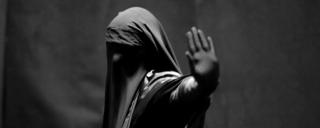
By taking a simple way of public self-expression such as dancing and associating it with a woman wearing a burka, cultural symbol that limits the freedom of that woman, Arash T. Riahi gives in THAT HAS BEEN BOTHERING ME THE WHOLE TIME the utopian suggestion of an emancipation which he alone hijacks in the end. A choreography-film charged with political struggle. This screening is made possible with the support of Sixpackfilm and the Austrian Cultural Forum.
Another artistic struggle, this time with the uncertainty of post-modern times that have no boundaries, restrictions, almost no end and no beginning is being shown in visual artist Pauline Julier’s AFTER. Over the aerial view of a night-time cityscape lighted up with fireworks, a meditative voice-over talks about the postmodern generation (of artists) as a bunch of kids who wrecked everything in the wake of their huge party and now, while waiting and secretly craving the return of their parents to restore order, they realize the parents are not returning anymore. Inspired by a quote from David Foster Wallace, comparing cultural to familial stability, AFTER unveils the insecurities and anxieties of the ones who soon have to become parents of a new generation while they themselves are still looking for structure and for balance. The film is screened with the support of Swiss Films Foundation.
In Jorge Quintela’s CAROUSEL, a pocket-film full of nostalgia, the present becomes the time of meditation and reflection about one’s own principles, the way in which they served you a lifetime and the people who have instilled them in you. The film questions the notions of family and identity, asking whether we are defined by who we are or by the ones that surround us. Through a man’s glasses, the reflection of a carousel keeps turning and turning, while, through a voice-over narration, his memories, wishes and regrets run through his mind like a vertigo. With nostalgic sadness and thoughtful humor, the film becomes a poetic cinematic experiment, a fragment from the intimate diary of a man looking back at who he was, trying to understand who he is. The screening is possible with the support of Agência da Curta Metragem.
The flux of memories continues with THIS IS NOW by Anders Jedenfors, an intimate portrayal of loneliness, that masterfully captures in black and white images the painful emptiness left behind when family ties have dissolved, the feeling of isolation and longing felt in old age. Downhearted voice-overs of elders speak to us of the universal difficulties that each person experiences: the physical and psychic need for affection and the recurring memories of dear ones. The stillness of the shots emphasizes a heavily bearing atmosphere, where the layers of gray in the image suffocate the space, hope and, finally, the sanity of the soul. This film is screened with the kind support of the Swedish Film Institute.
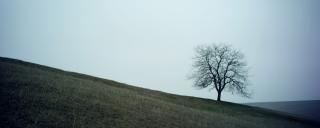
Coping with loss is also the main emotional struggle of THE TREE by Mihai Sofronea, an experiment on immobility and motion referencing the beginning of cinema, which combines a photographic approach to films with dramatic elements which need to be progressively decoded. Long-shots show from a distance two silhouettes, one of a woman, another of a man, a tree, a car, a book, and a story told in reverse. A minimalist film with an original concept, The Tree brings almost imperceptible variations on the same tableau, while keeping the viewer’s narrative expectations in suspense until the very end.
Further exploring loss and grief, THE WHITE ROSES, by Diogo Costa Amarante, questions identity, gender and family roles, while creating a general sense of ambiguity, underlined by absurd and oneiric elements. Symbolist in content and post-modernist in succession, relying on its minimalist aesthetic and extra-diegetic performances, the film boldly presents the mechanism of coping with the loss of a loved one, and the irrational side of mourning. The screening is possible courtesy of FiGa Films.
Taking it all one step further, this program also glances at the way in which society as a whole determines our understanding of ourselves and our primordial impulses, namely our sexual desires. A mix of quick and sudden sensations, ALL WE NEED IS SLAVES, directed by Luis Nieto is the experiment of subconscious thoughts and sexual healing as a reflex of the body and mind towards the limitations that society imposes. The film becomes a surrealist combat between the norm of self-control and the boiling desires, hidden from society’s direct look.
The natural protective capsule in which a person is born sets his behavior, his limits and his expectations. Further contact with life makes that same person want to protect the natural capsule from any adversities that would change it, consequently tremble the certain universe he has lived in. Once society has become a character in someone’s story, it is community that takes over the role of the belonging cell, with all its constructs, going from neighborhood to religion. After a while, society itself starts defining the individual as a family, nurturing him by imposing restrictions or shaping his desires. Going beyond the conventional definition of a family, we expand its meaning and explore its nuances and the structures similar to it that govern our lives; any system that nurtures our perception of the world, of ourselves and teaches us the rules of being.
"These films explore the profound contradictory nature of our affective bonds, which on one side nourish, protect and support us in our growth, while at the same time can limit our personal freedom and our natural impulse to explore life, through more or less conscious patterns of behaviour and thought deeply ingrained in our psyche." (Adina Pintilie, BIEFF)
Family ties become issues of self-expression, identity formation, personal boundaries, loss and grief, solitude, sexual exploration, crossing over the canonical motives of age or generation contradictions to revealing intimate perception of life. With an aesthetic that goes all the way through photography, symbolism, surrealism or black and white features, the film images are charged with strong political, cultural, sexual meaning or become emotional testimonials along with the voice-over that complements them.
In THIS TIME, LAST YEAR by Ana Maria Savin, a production of the National University of Theatre and Film Bucharest, a friendship between two girls is facing the risks of falling apart because of the inevitable process of growing up - a connection more powerful than a blood tie, a sense of possession that is genuine and dangerous at the same time, filled with the fear of being left alone, of someone breaking the safe family bulb that the girls have build all their lives.
By taking a simple way of public self-expression such as dancing and associating it with a woman wearing a burka, cultural symbol that limits the freedom of that woman, Arash T. Riahi gives in THAT HAS BEEN BOTHERING ME THE WHOLE TIME the utopian suggestion of an emancipation which he alone hijacks in the end. A choreography-film charged with political struggle. This screening is made possible with the support of Sixpackfilm and the Austrian Cultural Forum.
Another artistic struggle, this time with the uncertainty of post-modern times that have no boundaries, restrictions, almost no end and no beginning is being shown in visual artist Pauline Julier’s AFTER. Over the aerial view of a night-time cityscape lighted up with fireworks, a meditative voice-over talks about the postmodern generation (of artists) as a bunch of kids who wrecked everything in the wake of their huge party and now, while waiting and secretly craving the return of their parents to restore order, they realize the parents are not returning anymore. Inspired by a quote from David Foster Wallace, comparing cultural to familial stability, AFTER unveils the insecurities and anxieties of the ones who soon have to become parents of a new generation while they themselves are still looking for structure and for balance. The film is screened with the support of Swiss Films Foundation.
In Jorge Quintela’s CAROUSEL, a pocket-film full of nostalgia, the present becomes the time of meditation and reflection about one’s own principles, the way in which they served you a lifetime and the people who have instilled them in you. The film questions the notions of family and identity, asking whether we are defined by who we are or by the ones that surround us. Through a man’s glasses, the reflection of a carousel keeps turning and turning, while, through a voice-over narration, his memories, wishes and regrets run through his mind like a vertigo. With nostalgic sadness and thoughtful humor, the film becomes a poetic cinematic experiment, a fragment from the intimate diary of a man looking back at who he was, trying to understand who he is. The screening is possible with the support of Agência da Curta Metragem.
The flux of memories continues with THIS IS NOW by Anders Jedenfors, an intimate portrayal of loneliness, that masterfully captures in black and white images the painful emptiness left behind when family ties have dissolved, the feeling of isolation and longing felt in old age. Downhearted voice-overs of elders speak to us of the universal difficulties that each person experiences: the physical and psychic need for affection and the recurring memories of dear ones. The stillness of the shots emphasizes a heavily bearing atmosphere, where the layers of gray in the image suffocate the space, hope and, finally, the sanity of the soul. This film is screened with the kind support of the Swedish Film Institute.
Coping with loss is also the main emotional struggle of THE TREE by Mihai Sofronea, an experiment on immobility and motion referencing the beginning of cinema, which combines a photographic approach to films with dramatic elements which need to be progressively decoded. Long-shots show from a distance two silhouettes, one of a woman, another of a man, a tree, a car, a book, and a story told in reverse. A minimalist film with an original concept, The Tree brings almost imperceptible variations on the same tableau, while keeping the viewer’s narrative expectations in suspense until the very end.
Further exploring loss and grief, THE WHITE ROSES, by Diogo Costa Amarante, questions identity, gender and family roles, while creating a general sense of ambiguity, underlined by absurd and oneiric elements. Symbolist in content and post-modernist in succession, relying on its minimalist aesthetic and extra-diegetic performances, the film boldly presents the mechanism of coping with the loss of a loved one, and the irrational side of mourning. The screening is possible courtesy of FiGa Films.
Taking it all one step further, this program also glances at the way in which society as a whole determines our understanding of ourselves and our primordial impulses, namely our sexual desires. A mix of quick and sudden sensations, ALL WE NEED IS SLAVES, directed by Luis Nieto is the experiment of subconscious thoughts and sexual healing as a reflex of the body and mind towards the limitations that society imposes. The film becomes a surrealist combat between the norm of self-control and the boiling desires, hidden from society’s direct look.