IDFA Amsterdam: Diary Films

Curatorial presentation by Bianca Bănică
The prestigious International Documentary Film Festival IDFA Amsterdam comes back to BIEFF with a deeply moving and insightful theme program: DIARY FILMS: The Intimacy of Politics and the Politics Of Intimacy, screened with the kind support of the Rule of Law Program South-East Europe of Konrad-Adenauer-Stiftung.
Curated by Mr. Joost Daamen (the programmer of the PARADOCS section), the Diary Films theme program goes beyond the frame of traditional documentary filmmaking, on the borders between film and art, truth and fiction, narrative and conceptual. Exploring the complex tensions and connections between private lives and political contexts, these compelling four short films question the representational instruments of cinematic language and the various nuances of their inherent subjectivity.
It is not just subjectivity that governs these productions, as the phrase “diary films” might be a false friend phrase in this case, but also the auctorial aspect of the movies, in relation to the ontology of the image, contemporary political conflicts or deconstruction of myths. In a permanent switch between frontal confrontation and a behind-the-curtains reality, these films bring up the issue of cinematographic manipulation through image and sound. There is no certain story, but there is a certain reality happening around us. Reality is witnessed once through the lens and then a second time on screen, turning cinema intro a series of choices that the spectator is made aware of, sometimes even part of.
From the heart of the Civil War from Lebanon, JULY TRIP brings us violent images of street fights, demolished buildings, and people trying to escape from the wrecks left behind by spontaneous explosions. Showing the desperation of people trapped in the middle of chaos, the irrational fear that has them hiding behind curtains that will never provide enough protection, but also the international photographers pinning to get an award-winning picture, the film raises awareness about a conflict that resulted in nothing but destruction. Mixing complete silence with the extra-diegetic sounds that mimic the intensity of bombs through music, Wael Noureddine forces out contradictory attitudes from a viewer that is left to build and then analyze the image of victims, whether they are dead or alive.
While in JULY TRIP we are given a sense of the war through the filmmaker's direct contact with the terror raging on the civil battlefield, in DIRTY PICTURES (HOTEL DIARIES 7) the conflict is moved off-camera. Screened in 2013 at Oberhausen, what at first seems to be the start of a SciFi movie transforms into a handy-cam video about the contrast between the normality of the hotel room and the abnormality of the society surrounding it. Beginning in Bethlehem and ending on the other side of the Separation Wall, John Smith builds a thought provoking sample of meta-cinema reminiscent of Chris Marker, which relates his own experience of the Israeli occupation of Palestine, brilliantly managing to trim down the monstrosity of history to human proportions. The screening is possible courtesy of LUX Artists' Moving Image.
Remaining related to war, but this time getting close to those who wage it, DIARY OF SOMEONE WAITING by Judith Zdesar shows the usual non-heroic life of young soldiers guarding the border, preparing for a war that is not coming, waiting to catch immigrants that never appear, bouncing around in the snow like twelve-year boys in a summer camp. With absurd beckettian humor, any sense of authority disappears as the soldiers film one-another. The movie is a generic description of what life itself becomes at one point: a long wait for something to happen. With a keen eye that sketches sharp observations, the film explores these soldiers’ true selves, in time of peace, of no strict authority or imminent danger, when they have to make up their own minds on who and how to be. The screening is possible courtesy of Sixpackfilm Austria.
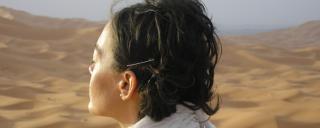
Going deeper into the private sphere, LIMITS 1ST PERSON by León Siminiani is a movie about a love lost in the loneliness of desert and regained through cinema that puts the viewer in the position of doubting the meaning of the reality shown on-screen. “Using clever but extremely simple means, LIMITS 1st PERSON plays with the ambivalent meaning of images. The filmmaker manages to completely invert the significance of the images not once, but twice. Where are the boundaries of the viewer's perspective, of the first person, as the title suggests? It appears they are all over the place. The viewer can think he knows what he is seeing, but a smart filmmaker takes that viewer by the hand and determines his place in the world like a god. If a mise-en-scène as apparently straightforward as a woman in a desert can so enthrall us, then just how powerful is the art of film?” (IDFA PARADOCS)
Curated by Mr. Joost Daamen (the programmer of the PARADOCS section), the Diary Films theme program goes beyond the frame of traditional documentary filmmaking, on the borders between film and art, truth and fiction, narrative and conceptual. Exploring the complex tensions and connections between private lives and political contexts, these compelling four short films question the representational instruments of cinematic language and the various nuances of their inherent subjectivity.
It is not just subjectivity that governs these productions, as the phrase “diary films” might be a false friend phrase in this case, but also the auctorial aspect of the movies, in relation to the ontology of the image, contemporary political conflicts or deconstruction of myths. In a permanent switch between frontal confrontation and a behind-the-curtains reality, these films bring up the issue of cinematographic manipulation through image and sound. There is no certain story, but there is a certain reality happening around us. Reality is witnessed once through the lens and then a second time on screen, turning cinema intro a series of choices that the spectator is made aware of, sometimes even part of.
From the heart of the Civil War from Lebanon, JULY TRIP brings us violent images of street fights, demolished buildings, and people trying to escape from the wrecks left behind by spontaneous explosions. Showing the desperation of people trapped in the middle of chaos, the irrational fear that has them hiding behind curtains that will never provide enough protection, but also the international photographers pinning to get an award-winning picture, the film raises awareness about a conflict that resulted in nothing but destruction. Mixing complete silence with the extra-diegetic sounds that mimic the intensity of bombs through music, Wael Noureddine forces out contradictory attitudes from a viewer that is left to build and then analyze the image of victims, whether they are dead or alive.
While in JULY TRIP we are given a sense of the war through the filmmaker's direct contact with the terror raging on the civil battlefield, in DIRTY PICTURES (HOTEL DIARIES 7) the conflict is moved off-camera. Screened in 2013 at Oberhausen, what at first seems to be the start of a SciFi movie transforms into a handy-cam video about the contrast between the normality of the hotel room and the abnormality of the society surrounding it. Beginning in Bethlehem and ending on the other side of the Separation Wall, John Smith builds a thought provoking sample of meta-cinema reminiscent of Chris Marker, which relates his own experience of the Israeli occupation of Palestine, brilliantly managing to trim down the monstrosity of history to human proportions. The screening is possible courtesy of LUX Artists' Moving Image.
Remaining related to war, but this time getting close to those who wage it, DIARY OF SOMEONE WAITING by Judith Zdesar shows the usual non-heroic life of young soldiers guarding the border, preparing for a war that is not coming, waiting to catch immigrants that never appear, bouncing around in the snow like twelve-year boys in a summer camp. With absurd beckettian humor, any sense of authority disappears as the soldiers film one-another. The movie is a generic description of what life itself becomes at one point: a long wait for something to happen. With a keen eye that sketches sharp observations, the film explores these soldiers’ true selves, in time of peace, of no strict authority or imminent danger, when they have to make up their own minds on who and how to be. The screening is possible courtesy of Sixpackfilm Austria.
Going deeper into the private sphere, LIMITS 1ST PERSON by León Siminiani is a movie about a love lost in the loneliness of desert and regained through cinema that puts the viewer in the position of doubting the meaning of the reality shown on-screen. “Using clever but extremely simple means, LIMITS 1st PERSON plays with the ambivalent meaning of images. The filmmaker manages to completely invert the significance of the images not once, but twice. Where are the boundaries of the viewer's perspective, of the first person, as the title suggests? It appears they are all over the place. The viewer can think he knows what he is seeing, but a smart filmmaker takes that viewer by the hand and determines his place in the world like a god. If a mise-en-scène as apparently straightforward as a woman in a desert can so enthrall us, then just how powerful is the art of film?” (IDFA PARADOCS)
International Documentary Film Festival IDFA Amsterdam / PARADOCS - partner festival
International Documentary Film Festival IDFA Amsterdam is one of the largest documentary festivals in the world. An exciting meeting place for documentary directors, producers, buyers, financiers and audiences alike. Every year since 1988, over 300 international documentaries are screened alongside an extensive off-screen programme. Besides the festival, IDFA hosts the prominent co-financing market for documentaries, the FORUM, the (online) market for new documentaries Docs for Sale and various other industry events such as the IDFAcademy. Throughout the year, IDFA supports filmmakers from developing countries with its IDFA Fund (formerly known as Jan Vrijman Fund) and organises activities aimed at both documentary professionals and audiences. These include the theatrical tour Best of IDFA, a DVD label, online documentary channel IDFAtv and several workshops. This year IDFA celebrated its 27th edition from 19th to the 30th of November.
PARADOCS is IDFA’s platform for showing experimental documentaries and video art. It’s open to everything that can be shown in a cinema and is related to the representation of reality. Besides being a film program, it’s also part of the exhibition Expanding Documentary - in collaboration with the Brakke Grond and IDFA DocLab. This exhibition contains among others (video) installations, photography, theater and performances related to documentary or representation of reality.
PARADOCS is IDFA’s platform for showing experimental documentaries and video art. It’s open to everything that can be shown in a cinema and is related to the representation of reality. Besides being a film program, it’s also part of the exhibition Expanding Documentary - in collaboration with the Brakke Grond and IDFA DocLab. This exhibition contains among others (video) installations, photography, theater and performances related to documentary or representation of reality.
Representative - Joost Daamen

Joost Daamen is a film programmer at the International Documentary Film Festival IDFA Amsterdam. He studied Film Studies at the University of Amsterdam. In 2005 he joined IDFA’s Program Department. Since 2007 he’s the programmer for IDFA’s experimental film section Paradocs. He’s also a member of the advisory committee for the competition programmes and works as a researcher for archive programmes.