
- You are here: Home > BIEFF 2014 International Competition: Theme Program – RECYCLED CINEMA: Films Made of Films
You are here
This year, true to its consistent focus on experimentation, Bucharest International Experimental Film Festival BIEFF launches a new challenge to its cinephile audience: the International Competition will be screened within theme programs, which bring together some of the most fearless short films of the past few years, in their search for new forms of cinematic expression:
ALTERNATIVE HISTORY: Lying to Tell the Truth
FAMILY TIES: Love Bonds or Prison Bars
RECYCLED CINEMA: Films Made of Films
IN SEARCH OF A SOUL: Spiritual Journeys
URBAN GHOSTS: Between Foreboding and Nostalgia
This thematic approach aims at expanding and deepening the cinematic experience, by placing individual works in more complex contexts, which push boundaries, trigger debates and challenge our preconceived ideas on multilayered notions such as truth, family, spiritual search and cinema itself.
RECYCLED CINEMA: Films Made of Films takes the repurposing of cinema to creatively exalting new heights. Working directly with preexisting materials, these filmmakers isolate the alchemical elements of cinema and manipulate them to deliver fresh and deeply engaging works. Whether through playful enthusiasm or reflective analysis, each film’s post-modernist deconstruction of its source material engages the viewer in a structural game of active participation, drawing him in its own process of subsequent reconstruction.
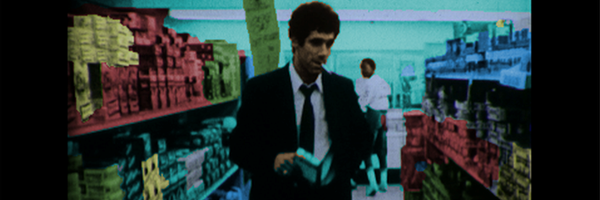
Addressing ethical issues of authenticity and creative ownership, EL ADIOS LARGOS playfully restores the opening scene of the (supposedly) only surviving print (a black and white, truncated, Spanish dubbed version) of Robert Altman’s classic, The Long Goodbye. Andrew Lampert's self-declared "painstaking restoration" sees the protagonist’s nocturnal ride to the supermarket becoming a psychedelic somnambulist’s trip. The characters float within a cinematic space, where analogue and digital artifacts playfully deconstruct the mise-en-scene, blotches of paint transforming the black-and-white space into a surreal carnival of color. A mischievous cinematic (re)reading that purposefully gets lost in the process, down the rabbit-hole. (Andrei Tănăsescu, BIEFF). Premiered at Toronto Wavelengths 2013 and screened in Rotterdam and Oberhausen 2014.
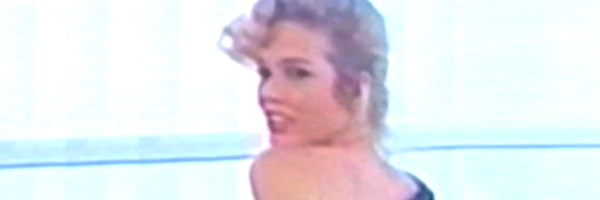
With the eye of the audience trained and ready, THE SHADOW OF YOUR SMILE looks at the hidden pleasures that lurk behind and in-between the artifacts of VHS adult films. An invisible protagonist starts a video cassette. The enigmatic smile of a young girl fills the screen, in slow motion, making us already imagine an unrequited love story between her and the unseen character. Yet, as the source-material begins to censor itself via its unstable image calibration, the film gets fast-forwarded by the unseen, archetypal impatient viewer and the supposed love story takes an unexpected turn. With tongue firmly in cheek, Alexei Dmitriev plays freely with the viewer’s expectations, while simultaneously exploring the possibility of reshaping the semantics of the images by manipulating their sound and taking them out of context. (Andrei Tănăsescu & Diana Mereoiu, BIEFF)
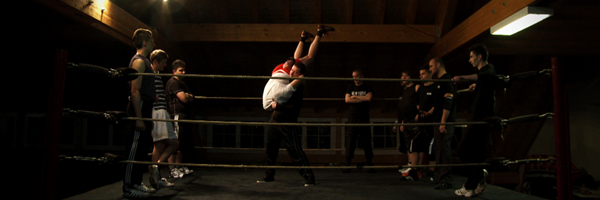
Switching to a different adolescent nostalgia, the sincere confessional, ME, NOBODY AND I, screened in Edinburgh Film Festival 2014, is a playful rite of passage into adulthood (or is it manhood?) that is sure to resonate on multiple levels with viewers. Via voice-over, Joerg Hurschler recalls and confronts his childhood idols and ideals. By literally becoming the macho wrestler, the mysterious cowboy of the Wild West or the alluring action figure (here David Hasselhoff!), Hurschler figuratively employs their specific genre stylistics to make them come alive. In the process, archetypes of TV and cinema are collaged together as the existential conflict of the director lures the viewer towards its victorious conclusion of self-realization. (Andrei Tănăsescu, BIEFF)
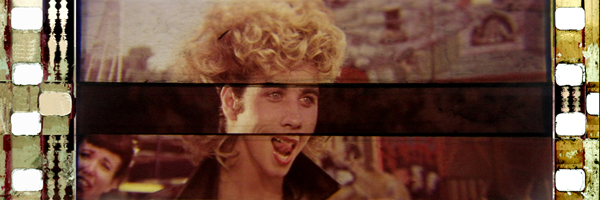
Cinematic role-models undertake a different form of scrutiny in G/R/E/A/S/E, a self-described “handmade décollage”, that takes the famous rock'n'roll musical comedy Grease as source material. Antoni Pinent literally puts John Travolta and Olivia Newton John’s characters under his caméra-stylo's knife: working directly with 35mm prints, the filmmaker isolates and magnifies the pop(ular) imagery and dialogue of the cult film by splitting and splicing frames into a physical and formal cinematic remix that becomes a pure delight for the senses. Cultural signifiers deconstructed, the film’s campy, manufactured pop-cinema look is taken to the extreme, letting the viewer know that its cross-cultural resonance (and dominance) have just begun. (Andrei Tănăsescu, BIEFF). Screened in Curtas Vila do Conde 2013, BFI London 2013, BAFICI Buenos Aires 2014, Vienna International Film Festival 2014.
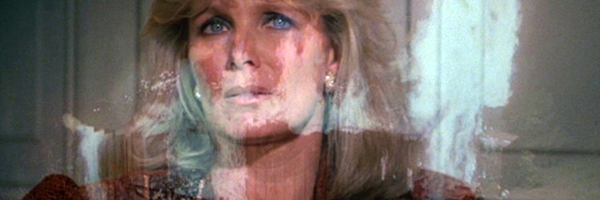
The deconstruction of characters is taken further in Michael Robinson's THE DARK, KRYSTLE, where footage from the popular 1980s soap opera Dynasty is skillfully turned into an unsettling psychodrama that pits against each other the polar-opposite female protagonists of the TV show, Krystle and Alexis. Making use of soap opera’s good-evil archetypes and their trademark emotive gestures, Robinson’s dramatically-precise montage and electronic score transports the characters in a multi-layered, metaphysical realm. Recalling David Lynch’s split-psyche narratives, THE DARK, KRYSTLE transcends its source material to become a wholly original and self-contained work of cinema. (Andrei Tănăsescu, BIEFF). Best Experimental Film winner at Melbourne International Film Festival 2014 and screened in prestigious festivals such as: Oberhausen 2014, BFI London 2014, Festival du Nouveau Cinema Montreal 2014, New York Film Festival: Views from the Avant-Garde 2013. The BIEFF 2014 screening is possible thanks to the kind support of Video Data Bank.
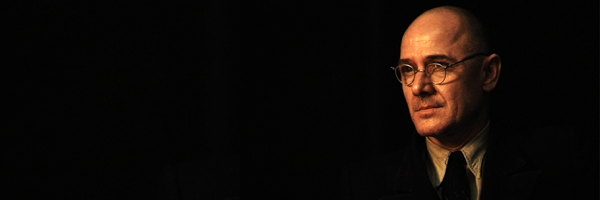
Shifting registers to a singular character’s re-construction, QUESTIONS TO MY FATHER – awarded a Special Mention at Berlinale – is an endearing imaginary dialogue between the visual artist Konrad Mühe and his recently deceased father, the famous Ulrich Mühe, who starred in The Life of Others. Questioning the limit between reality and fiction, privacy and art, the filmmaker edits fragments from his father’s films, merging all of the characters his father ever played in an attempt to find answers to questions the son never had the opportunity to ask him. But the dialogue turns to an interrogation, the questions to accusations, and feelings blend together in a mix of conflicting emotions. A painful, and yet affectionate reunion, the film becomes both a way of coping with the loss of the father, but also of keeping his memory alive. (Diana Mereoiu, BIEFF)
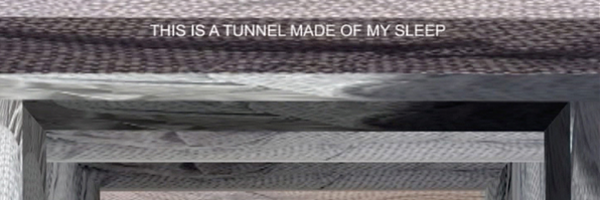
Winner of Best Experimental Short at New Horizons Film Festival and screened in Toronto Wavelengths and Oberhausen, DRY STANDPIPE is an unique object d’art. Working from his private collection of Hi8 videos, the Polish visual artist Wojciech Bakowski literally wraps selected film sequences around CGI sculptures and presents them in their formal minimalism against a black background. Counteracting these conceptual abstractions with his deadpan description of their personal meaning, each sculpture’s signifiers are deconstructed with candidness and unsophistication. The result is a poetic piece of art unconventional in style and materials – an arte povera for the digital age, where artist and audience are on equal, analytical footing. (Andrei Tănăsescu, BIEFF)
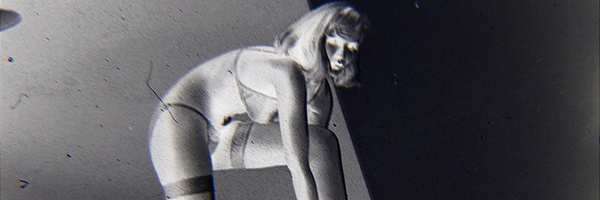
This free-spirited and playfully imaginative re-visitation of cinema comes full circle with the latest work from master of experimental film Peter Tscherkassky, COMING ATTRACTIONS, a (post)modernist homage to silent film’s cinema of attractions. His 35mm celluloid manipulation of fragments from advertising footage references sequences from silent films by adhering to their respective cinematic language. A pas-de-deux of form and rhythm, COMING ATTRACTIONS brings the past to the present by offering a lesson in the history of cinema that is as much food for thought as it delights the senses. (Andrei Tănăsescu, BIEFF). The screening is possible due to the generous support of BIEFF’s constant partners Sixpackfilm and the Austrian Cultural Forum in Bucharest.
The 5th edition of Bucharest International Experimental Film Festival BIEFF will take place between December 10th–14th, 2014, at CinemaPRO and Cinema Elvira Popescu.
BIEFF is honoured and grateful to receive support and inspiration from its partners: Quinzaine des Réalisateurs Cannes, Berlinale Forum Expanded, International Film Festival Rotterdam, Oberhausen Film Festival, IDFA Amsterdam Paradocs, Centre Pompidou, Le Fresnoy - Studio National des Arts Contemporains, CINEDANS - Dance on Screen Festival Amsterdam, Tampere Film Festival, Sixpackfilm Austria and EYE Film Institute Netherlands.
BIEFF would not possible without the support of the Romanian National Cinema Centre, the National University of Theatre and Film Bucharest, the National University of Arts Bucharest, the Romanian Filmmakers' Union, UCIN, the Romanian Cultural Institute, the French Institute in Bucharest, the Austrian Cultural Forum.
Media partners: 121.ro, B365.ro, CalendarEvenimente.ro, Carturesti.ro, CineFan.ro, CinemaRx.ro, DorDeDuca.ro, FilmReporter.ro, GingerGroup.ro, iFestival.ro, IQads.ro, LaPunkt.ro, LiterNet.ro, OrasulM.eu, PostModern.ro, Revista Arte & Meserii, Studentie.ro, Sub25.ro, TOTB.ro, Urban Things Romania, WeART.ro, Ziarul Metropolis.