You are here
Sarajevo Film Festival: Identity and Belonging

Curatorial presentation by Adina Marin
Bucharest International Experimental Film Festival BIEFF is proud to announce the beginning of an inspiring collaboration with the Sarajevo Film Festival. It has been suggested that festivals may influence their host community to the same extent as they in their turn are influenced by it. In our case, the profile of the festival has undoubtedly been shaped by its position. Sarajevo is a vibrant cosmopolitan city where East meets West. It is the very place where WW1 originated (or at least the excuse for it). It is the only major European city to have a Mosque, a Catholic church, an Orthodox church and a Synagogue within the same neighborhood. In the 1990s it was besieged and on the edge of annihilation. Towards the end of the siege, the Sarajevo Film Festival was initiated with the aim of helping to reconstruct civil society and retain the cosmopolitan spirit of the city. If there is a place in Europe where the whole lot of questions related to multi-ethnicity, (in)tolerance, identity and belonging are genuinely rooted in reality, this place is definitely Sarajevo. And since it is the digital age we are living in, the search of identity can take new forms. Coincidentally (or perhaps not), the films in this selection address, each in its own way, these very issues.
Western myths are questioned in Ulu Braun’s The Hostel, while the European urban space is denounced as a place of violence and alienation in Martin Cries. In Artificial Sunshine, the identity of a place swings between naturalness and artificiality, and so do the lives of its inhabitants. Patriotism as a sense of belonging is tackled with wry humour in Polonaise, and in Titan we learn how the loss of identity in an urban environment of violence and crime is bound to distort the lives of teenagers.
In his unique collage style, Ulu Braun creates a space betwixt and between reality and the digital world in The Hostel, where people of the past or present, either mythological or real creatures, and their artefacts are juxtaposed on dramatic naturescapes. The derelict building of a timeless inn lies at the confluence of this political and social landscape across ages, somewhere in Europe.
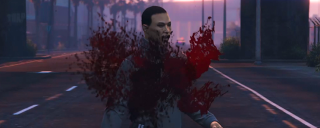
Moving to somewhere in the computer gaming world, Jonathan Vinel creates in Martin Cries a story of tenderness wrapped in layers of violence and anger. One is prompted to imagine how it would feel to wake up one day and realize that all one's friends have disappeared. Both Martin and the places he searches in the quest of his lost friends are computer generated imagery, but the voice accompanying it is warm, soft-spoken and profoundly human, creating a powerful contrast. Friendship is like a lighthouse in a sea of hostile urbanity, hence the friends' absence generates anger and violent reactions. However, like a true computer-generated character, Martin eventually promises himself and us that he'll go on searching all his life, and that he'll never die.
Artificial Sunshine proposes a different quest of identity by means of a threefold audio-visual account of Blackpool, a place of contrasts, the British version of Las Vegas. There is the depiction in stunning imagery of a town by the sea; then, its artificial counterpart with strident people and sounds, slot machines and even an Elvis lookalike. And there comes a third layer lying deep underneath, made of childhood recollections continuously altered by new memories stored on top of the old ones. Conor Rollins cleverly intermingles archive footage shot on 8 mm and 16 mm, VHS home videos and beautiful digital images to create the cinematic portrait of an urban space which, like the double-faced Janus, turns to the viewer its natural and artificial side in alternate succession.
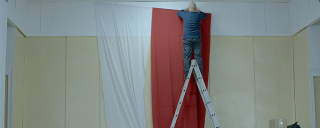
What does it mean to be a patriot today? In a lively pace borrowed from its musical namesake, Polonaise takes the appearance of comedy to cast a harsh look at people's grasp of patriotism. A contest planned to take place on Independence Day in a Polish town is supposed to select the region’s patriot number one. The film is constructed with expert precision and wry humour for good measure: the jurors are a small-scale representation of Polish society, and the show itself is a Poland Got Talent of sorts, with contestants going out of their ways to praise the homeland. Eventually, the most patriotic of all takes home a tv set of Japanese making and the viewer is left with a bitter laugh at the ridicule of patriotism pushed beyond its sense of identity and belonging, where it ceases to be a virtue.
On the outskirts of a neighbourhood in Le Port (Réunion Islands), a teenager asks fimmaker Johannes Frese to give him a euro and then, out of the blue, attacks him with a bottle. Titan switches from a personal unfortunate encounter to the attacker's background-story. The filmmaker seeks out the boy's father, is interested in the family, visits them and gets to talk to them. A film telling a story about far-reaching injustice and its toxic ability to reproduce.
Western myths are questioned in Ulu Braun’s The Hostel, while the European urban space is denounced as a place of violence and alienation in Martin Cries. In Artificial Sunshine, the identity of a place swings between naturalness and artificiality, and so do the lives of its inhabitants. Patriotism as a sense of belonging is tackled with wry humour in Polonaise, and in Titan we learn how the loss of identity in an urban environment of violence and crime is bound to distort the lives of teenagers.
In his unique collage style, Ulu Braun creates a space betwixt and between reality and the digital world in The Hostel, where people of the past or present, either mythological or real creatures, and their artefacts are juxtaposed on dramatic naturescapes. The derelict building of a timeless inn lies at the confluence of this political and social landscape across ages, somewhere in Europe.
Moving to somewhere in the computer gaming world, Jonathan Vinel creates in Martin Cries a story of tenderness wrapped in layers of violence and anger. One is prompted to imagine how it would feel to wake up one day and realize that all one's friends have disappeared. Both Martin and the places he searches in the quest of his lost friends are computer generated imagery, but the voice accompanying it is warm, soft-spoken and profoundly human, creating a powerful contrast. Friendship is like a lighthouse in a sea of hostile urbanity, hence the friends' absence generates anger and violent reactions. However, like a true computer-generated character, Martin eventually promises himself and us that he'll go on searching all his life, and that he'll never die.
Artificial Sunshine proposes a different quest of identity by means of a threefold audio-visual account of Blackpool, a place of contrasts, the British version of Las Vegas. There is the depiction in stunning imagery of a town by the sea; then, its artificial counterpart with strident people and sounds, slot machines and even an Elvis lookalike. And there comes a third layer lying deep underneath, made of childhood recollections continuously altered by new memories stored on top of the old ones. Conor Rollins cleverly intermingles archive footage shot on 8 mm and 16 mm, VHS home videos and beautiful digital images to create the cinematic portrait of an urban space which, like the double-faced Janus, turns to the viewer its natural and artificial side in alternate succession.
What does it mean to be a patriot today? In a lively pace borrowed from its musical namesake, Polonaise takes the appearance of comedy to cast a harsh look at people's grasp of patriotism. A contest planned to take place on Independence Day in a Polish town is supposed to select the region’s patriot number one. The film is constructed with expert precision and wry humour for good measure: the jurors are a small-scale representation of Polish society, and the show itself is a Poland Got Talent of sorts, with contestants going out of their ways to praise the homeland. Eventually, the most patriotic of all takes home a tv set of Japanese making and the viewer is left with a bitter laugh at the ridicule of patriotism pushed beyond its sense of identity and belonging, where it ceases to be a virtue.
On the outskirts of a neighbourhood in Le Port (Réunion Islands), a teenager asks fimmaker Johannes Frese to give him a euro and then, out of the blue, attacks him with a bottle. Titan switches from a personal unfortunate encounter to the attacker's background-story. The filmmaker seeks out the boy's father, is interested in the family, visits them and gets to talk to them. A film telling a story about far-reaching injustice and its toxic ability to reproduce.