
- You are here: Home > JULY TRIP
You are here


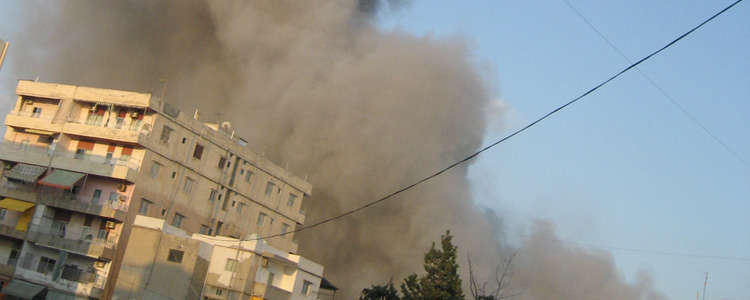

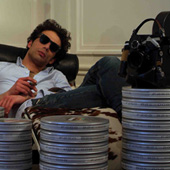
WAËL NOUREDDINE is a writer, poet and filmmaker. He began his professional career as a journalist. His films deal with real-life situations in literary and critical terms. They try to capture the physical and mental scars of conflict, while resisting subjugation and submission. In 2002, he directed and produced his first documentary film, CHEZ NOUS A BEYROUTH, which premiered at the French Cinémathèque as part of the Avant-Garde program. In 2005, he directed FROM BEYROUTH WITH LOVE, an experimental documentary that was screened in more than 200 festivals and museums, winning prizes in Europe, but almost never screened in Beirut. In 2006, at the outbreak of the war, he immediately returned to Beirut from Paris, where he was living at the time, and shot July Trip.
- Clermont-Ferrand International Short-Film Festival 2007
- IDFA International Documentary Film Festival Amsterdam 2007
- Torino Film Festival 2007
- Toronto Reel World Film Festival 2007
- Jeonju Film Festival Korea 2007
- Huesca International Film Festival 2007
- Brooklyn Film Festival 2007
- New York Film Festival 2007
When this last war broke out, I was faraway in my house in Paris. I had but one idea: to return to Beirut as quickly as possible and to begin shooting a film, for historical moments were taking place. This film became indispensible: to film so that history would cease repeating itself and to build up a picture library for future generations. I never understood why so few films were made during the Lebanese Civil War. Apart from the odd film, nothing remains from that time. The war surely merited more attention. (Waël Noureddine)
Curator's comment:
This film is more an essay than a documentary. The film plunges us in a universe in war: the images shot in 16mm sublimate a tension, frightening because of the lack of sound. An incipit in silence, almost a reference made to all the noises caused by the bombs, by the explosions, which will follow to this unconventional beginning. More than to give us his version of the war in Lebanon, the director suggests to us keys of reading throughout film. What does one have to think about the foreign journalists, who put themselves in scene in front of the camera? Do they remain bits of humanity behind the cameras which pile up in front of a corpse in rigor mortis? (Mediterranean Films)