
- You are here: Home > THE WHITE ROSES
You are here

Cinema Elvire Popesco -
Thursday, December 11, 2014 - 20:00
Written by:
Diogo Costa Amarante
Cast:
Carolina Tamez, Cristina Tamez, Francisco Rodriguez, Oisin Managhan
Cinematography:
Federico Martin Cesca
Sound:
Erin Michelle Vassilopoulos, Jono Chanin
Music:
Rodger Hodgson, Simon Boswell
Production:
Wyatt Rockefeller
Romanian premiere
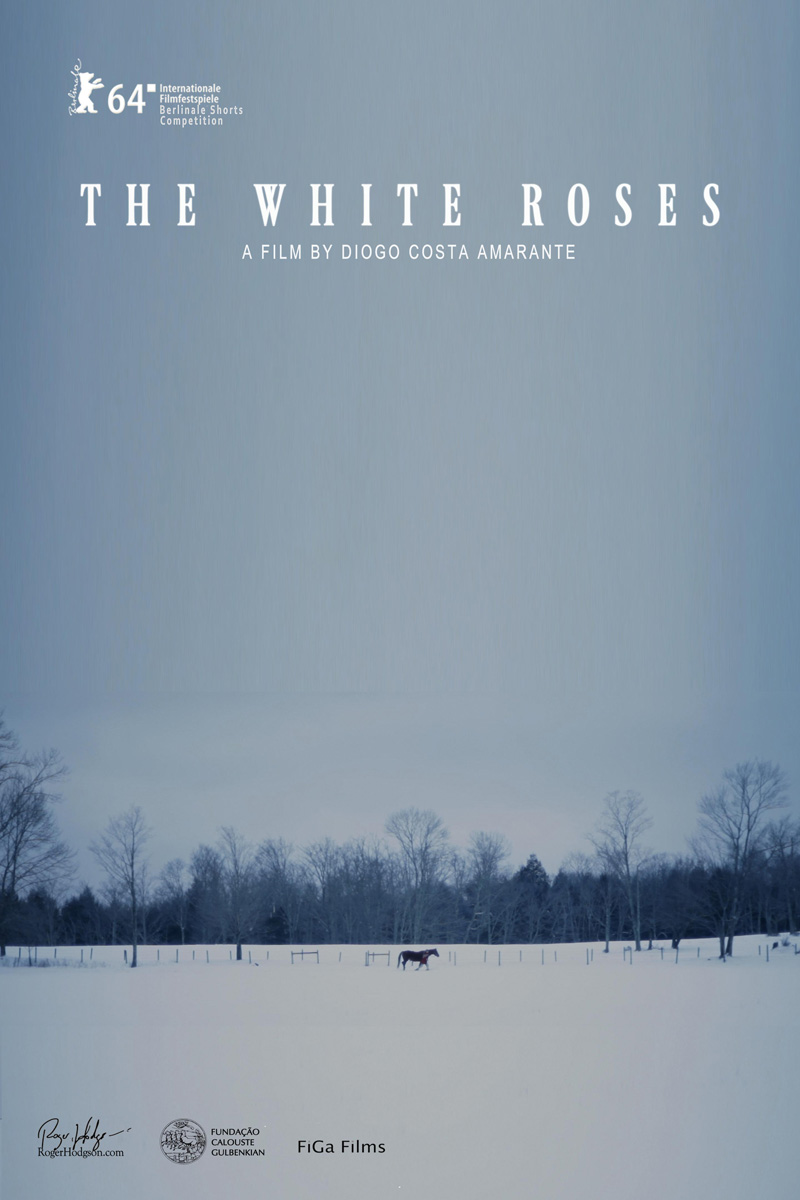
Screened at Berlinale 2014, THE WHITE ROSES, by Diogo Costa Amarante, questions identity, gender and family roles, while creating a general sense of ambiguity, underlined by absurd and oneiric elements. Symbolist in content and post-modernist in succession, relying on its minimalist aesthetic and extra-diegetic performances, the film boldly presents the mechanism of coping with the loss of a loved one, and the irrational side of mourning (Bianca Bănică, BIEFF 2014)
Director:

DIOGO COSTA AMARANTE is a young Portuguese filmmaker who graduated in Law and is currently finishing his Master of Fine Arts at the New York University / Tisch School of the Arts. He started his career directing short documentaries which were well appreciated in the festivals like Reykjavik International Film Festival or Documentamadrid. His first fiction short film premiered at the Montreal World Film Festival and was selected at Sofia International Film Festival.
Contact:
diogocostaamarante[at]gmail[dot]com
Festivals, awards:
- Berlin International Film Festival 2014
- IndieLisboa Independent Film Festival 2014
Curator's statement:
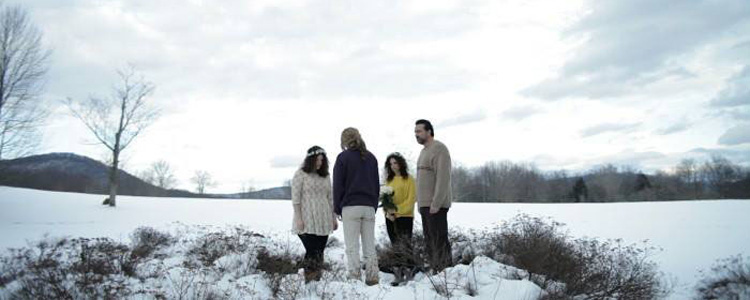
A group of people dance on an open space to the music of Supertramp. The siblings take flowers to a grave in deep snow, wearing floral wreaths in their hair. The father directs them. They embrace one another. Memories are invoked by pictures enclosed inside Gabriel’s, the brother’s, amulet. The mother is dead – how will they fill the void she left behind? Each individual family member tries to find their way, is obliged to redefine their course. (Maike Mia Höhne)
We are faced with a dispersed narrative (…) it tries to show a different side of the one who suffered a loss and is now trying to find himself. If on one side any logic is gone, on the other, we are shown a series of slow-motion images with choir singers from a church, as if Amarante’s intention were to tell us that faith and hope are still an important part of this family’s life. If on one hand the rural environment where the family lives is a clear reflection of the cold, distant and isolated psychological space that brilliantly blends with the gloomy morning atmosphere it is no less true that this kind of actions, like the one that lead us to the choir sequence, are meant to deliver a hint of comfort that may (or may not) be found again. (Paulo Peralta, CinEuphoria)
A group of people dance on an open space to the music of Supertramp. The siblings take flowers to a grave in deep snow, wearing floral wreaths in their hair. The father directs them. They embrace one another. Memories are invoked by pictures enclosed inside Gabriel’s, the brother’s, amulet. The mother is dead – how will they fill the void she left behind? Each individual family member tries to find their way, is obliged to redefine their course. (Maike Mia Höhne)
We are faced with a dispersed narrative (…) it tries to show a different side of the one who suffered a loss and is now trying to find himself. If on one side any logic is gone, on the other, we are shown a series of slow-motion images with choir singers from a church, as if Amarante’s intention were to tell us that faith and hope are still an important part of this family’s life. If on one hand the rural environment where the family lives is a clear reflection of the cold, distant and isolated psychological space that brilliantly blends with the gloomy morning atmosphere it is no less true that this kind of actions, like the one that lead us to the choir sequence, are meant to deliver a hint of comfort that may (or may not) be found again. (Paulo Peralta, CinEuphoria)