
- You are here: Home > JEANNETTE, THE CHILDHOOD OF JOAN OF ARC
You are here


Cinema Muzeul Țăranului -
Monday, March 26, 2018 - 20:00
Cinema Elvire Popesco -
Thursday, March 29, 2018 - 18:30
Written by:
Bruno Dumont, based on Les Mystères de la Charité Jeanne d'Arc by Charles Péguy
Cast:
Lise Leplat Prudhomme, Jeanne Voisin, Lucile Gauthier, Victoria Lefebvre, Aline Charles, Elise Charles, Nicolas Leclaire, Gery De Poorter, Regine Delalin, Anaïs Rivière
Cinematography:
Guillaume Deffontaines
Editing:
Bruno Dumont, Basile Belkhiri
Sound:
Philippe Lecteur
Music:
Igorrr
Choreography:
Philippe Decoufflé
Producer:
Jean Bréhat, Rachid Bouchareb, Muriel Merlin
Production:
Taos Production, Arte France, Pictanovo
Bucharest Premiere
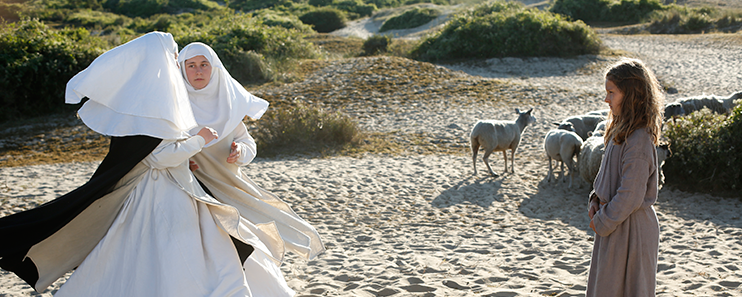
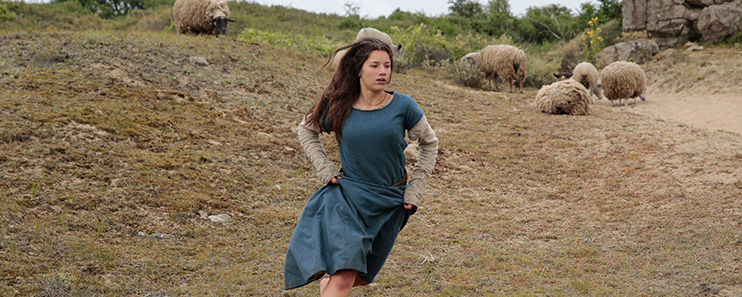
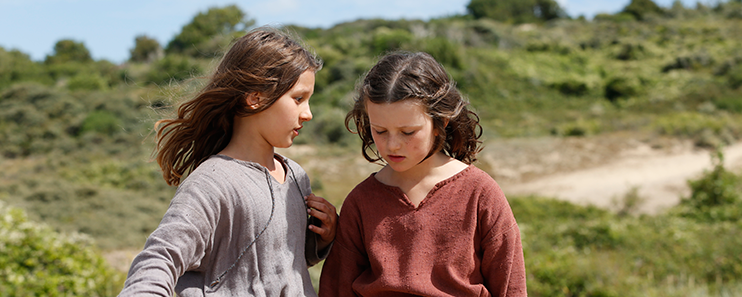
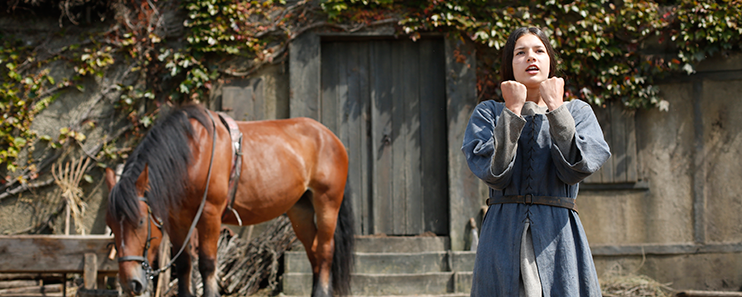
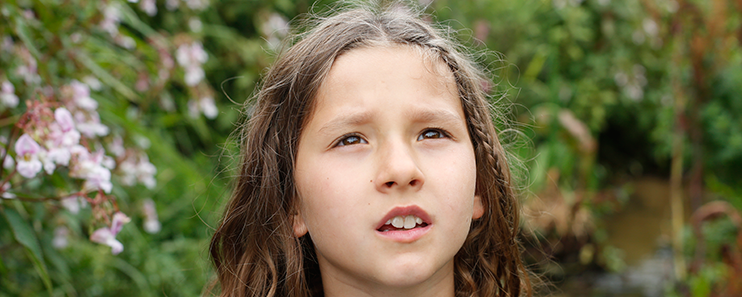
France, 1425. In the midst of the Hundred Years’ War, the young Jeannette, at the still tender age of 8, looks after her sheep in the small village of Domremy. One day, she tells her friend Hauviette how she cannot bear to see the suffering caused by the English. Madame Gervaise, a nun, tries to reason with the young girl, but Jeannette is ready to take up arms for the salvation of souls and the liberation of the Kingdom of France. Carried by her faith, she will become Joan of Arc. Imagine all of this sung and danced and you will probably get but a vague idea all the same of how daring Bruno Dumont’s latest feature really is. His electro-metal musical featuring wild head-banging performed by children, teenagers and twin nuns may very well be the most eccentric cinematic take on Joan of Arc’s story to date.
“With his tenth feature, Bruno Dumont radically delves into Joan's childhood with a category-defying period-cum-techno-head-banging musical, derived from two works by French writer Charles Péguy... Exquisitely shot in a palette of royal blues, heather greens, and sand by Guillaume Deffontaines, Jeannette, the Childhood of Joan of Arc oozes elemental beauty. With a touch of Straub-Huillet materialism, Dumont casts non-actors in the leading roles and makes use of live sync sound for the sung, a cappella dialogue, creating an intoxicating combination of naturalism, amateurism, and anarchic artifice that is bolstered by an electro-metal score from French multi-instrumentalist Igorrr and a majorettes-meets–mosh pit choreography with hair-wagging paroxysms. Heady, strange, genuinely funny, and completely out of time, Jeannette, the Childhood of Joan of Arc is one helluva contribution to the canon of ‘Joan films’ and further proof of Dumont's astonishing versatility and uncompromising vision.” (Andréa Picard, Toronto International Film Festival)
“Pitched somewhere between Straub-Huillet and Headbangers Ball, Monty Python and Messiaen, Bruno Dumont’s new feature Jeannette, the Childhood of Joan of Arc marks an unexpected and near-perfect synthesis of the French iconoclast’s many disparate interests and obsessions… For all the criticism Dumont has endured for abandoning realism and forsaking characters for caricature, he’s responsible for some of the most exhilaratingly alive cinema in the world right now.” (Jordan Cronk, Cinema Scope)
“As in Straub-Huillet’s work,here is the bracing delight of cinema’s core pleasure: the camera conjuring fierce physicality, light changes, the sounds of a specific place, the encounter of another person’s presence—and that person’s inextricable role as a participant in making or unmaking the world around them… In its spare focus and unvarying location, Dumont's fabulous film stringently channels provincial desperation, nationalist shame, religious aspiration and spiritual yearning into a form nearly naked in its vulnerable faith and silliness.” (Daniel Kasman, The Notebook)
“The line between headbanging and praying is perhaps more pervious than one would think, and what emerges from Jeannette, the Childhood of Joan of Arc is something like a divine faith in the power of film to capture Joan of Arc’s gradual spiritual awakening.” (Jordan Mintzer, The Hollywood Reporter)
“With his tenth feature, Bruno Dumont radically delves into Joan's childhood with a category-defying period-cum-techno-head-banging musical, derived from two works by French writer Charles Péguy... Exquisitely shot in a palette of royal blues, heather greens, and sand by Guillaume Deffontaines, Jeannette, the Childhood of Joan of Arc oozes elemental beauty. With a touch of Straub-Huillet materialism, Dumont casts non-actors in the leading roles and makes use of live sync sound for the sung, a cappella dialogue, creating an intoxicating combination of naturalism, amateurism, and anarchic artifice that is bolstered by an electro-metal score from French multi-instrumentalist Igorrr and a majorettes-meets–mosh pit choreography with hair-wagging paroxysms. Heady, strange, genuinely funny, and completely out of time, Jeannette, the Childhood of Joan of Arc is one helluva contribution to the canon of ‘Joan films’ and further proof of Dumont's astonishing versatility and uncompromising vision.” (Andréa Picard, Toronto International Film Festival)
“Pitched somewhere between Straub-Huillet and Headbangers Ball, Monty Python and Messiaen, Bruno Dumont’s new feature Jeannette, the Childhood of Joan of Arc marks an unexpected and near-perfect synthesis of the French iconoclast’s many disparate interests and obsessions… For all the criticism Dumont has endured for abandoning realism and forsaking characters for caricature, he’s responsible for some of the most exhilaratingly alive cinema in the world right now.” (Jordan Cronk, Cinema Scope)
“As in Straub-Huillet’s work,here is the bracing delight of cinema’s core pleasure: the camera conjuring fierce physicality, light changes, the sounds of a specific place, the encounter of another person’s presence—and that person’s inextricable role as a participant in making or unmaking the world around them… In its spare focus and unvarying location, Dumont's fabulous film stringently channels provincial desperation, nationalist shame, religious aspiration and spiritual yearning into a form nearly naked in its vulnerable faith and silliness.” (Daniel Kasman, The Notebook)
“The line between headbanging and praying is perhaps more pervious than one would think, and what emerges from Jeannette, the Childhood of Joan of Arc is something like a divine faith in the power of film to capture Joan of Arc’s gradual spiritual awakening.” (Jordan Mintzer, The Hollywood Reporter)
Director:

Bruno Dumont has also directed, among others, Ma Loute (2016), P'tit Quinquin (2014) and Camille Claudel 1915 (2013).
Festivals, awards:
- Quinzaine des Réalisateurs - Cannes Film Festival 2017
- Toronto International Film Festival 2017
- International Film Festival Rotterdam 2018
- Karlovy Vary International Film Festival 2017
- Viennale 2017
- Transilvania International Film Festival 2017
- Festival du Nouveau Cinéma Montréal 2017
- Festival International de cinema de Morelia 2017
- Busan International Film Festival 2017
- Rio de Janeiro International Film Festival 2017
- Rendez-vous with French Cinema in Paris 2018
Filmmaker's statement:
The important thing is believing in what you see, rather than having a reality before your eyes, and yet which is not able happen. Everything is transposition, everything is transfiguration. Young Joan does not walk in the Meuse, she walks in our imagination. But to walk there, we have to see her walking somewhere in this supposed stream. That’s what cinema does. Everything else is secondary: The set, the actors, the screenplay. What counts is the way it all fits together. Cinema is the right mystification which creates the assembly. Cinema rightly mystifies, and we are well aware of that: That’s cinema. That in no way diminishes the sincerity of the emotions we experience – on the contrary. The purification happens just as much because we genuinely believe in it, as if for real and under the benevolent and emancipating protection of its fiction where our superstitions are fulfilled. It’s the mysterious harmony of the whole which tips it into a prodigious transfiguration, an illumination of a radiant truth. Not on the screen, but in the heart of the spectator. The movie spectator is thus the very heart of the work. That is why the young Joan so often looks directly at him or her. (Bruno Dumont)
The important thing is believing in what you see, rather than having a reality before your eyes, and yet which is not able happen. Everything is transposition, everything is transfiguration. Young Joan does not walk in the Meuse, she walks in our imagination. But to walk there, we have to see her walking somewhere in this supposed stream. That’s what cinema does. Everything else is secondary: The set, the actors, the screenplay. What counts is the way it all fits together. Cinema is the right mystification which creates the assembly. Cinema rightly mystifies, and we are well aware of that: That’s cinema. That in no way diminishes the sincerity of the emotions we experience – on the contrary. The purification happens just as much because we genuinely believe in it, as if for real and under the benevolent and emancipating protection of its fiction where our superstitions are fulfilled. It’s the mysterious harmony of the whole which tips it into a prodigious transfiguration, an illumination of a radiant truth. Not on the screen, but in the heart of the spectator. The movie spectator is thus the very heart of the work. That is why the young Joan so often looks directly at him or her. (Bruno Dumont)