
- You are here: Home > THE RAIN IS GONE
You are here
Cinema Muzeul Țăranului -
Wednesday, March 28, 2018 - 21:00
Cinema Elvire Popesco -
Saturday, March 31, 2018 - 16:00
Cast:
Awet Asheber, Dawit Tsegai, Nouraldin Musa, Liat Boltsman, Liat Shabtai, Goytom Brahne, Yonatan Yohanns Estifanos, Ybrah Menan, Liat Shabtai, Shaharit Yerushalmi
Cinematography:
Philippe Bellaiche
Editing:
Noam Enbar
Sound:
Tully Chen
Music:
Noam Enbar
Producer:
Avi Mograbi, Serge Lalou
Production:
Les Films d'Ici
Romanian Premiere
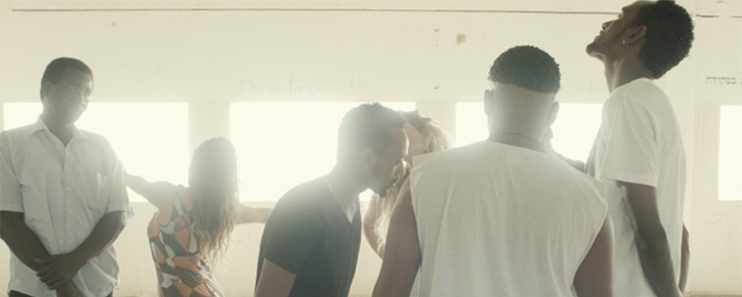
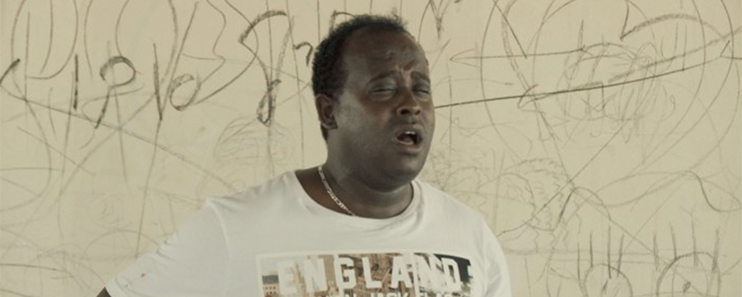
Holot is a detention center in the Israeli desert near the Egyptian border. It houses asylum-seekers from Eritrea and Sudan who can’t be sent back to their own countries, but who have no prospects in Israel either thanks to the country’s policies. Theater director Chen Alon and filmmaker Avi Mograbi decided to initiate a theater workshop with these people in the most precarious of situations. The structured-improvisatory composition The Rain Is Gone is has been devised by Noam Enbar and performed in collaboration with the workshop participants. It takes a popular Israeli agricultural song, associated with the kibbutz movement, turning it into an expressive polyphonic chant. (Berlinale Forum Expanded)
Director:

Contact:
noam.inbar[at]gmail[dot]com
Festivals, awards:
Berlin International Film Festival 2017
Filmmaker’s statement:
The Rain Is Gone is a participatory event. We take a famous Israeli agricultural song dealing with the passing of winter and beginning of spring, turning it into an expressive polyphonic chant. The participation of a group of asylum seekers from Eritrea and Sudan in this public rite throws the event into the realm of metaphor, where winter is associated with oppression and spring with the yearning for freedom. The work deals with the desire to free ourselves from outside oppressive political forces, like our government or the one in Eritrea, or internal oppressive forces, that are as dangerous. (Noam Enbar)
The Rain Is Gone is a participatory event. We take a famous Israeli agricultural song dealing with the passing of winter and beginning of spring, turning it into an expressive polyphonic chant. The participation of a group of asylum seekers from Eritrea and Sudan in this public rite throws the event into the realm of metaphor, where winter is associated with oppression and spring with the yearning for freedom. The work deals with the desire to free ourselves from outside oppressive political forces, like our government or the one in Eritrea, or internal oppressive forces, that are as dangerous. (Noam Enbar)