
- You are here: Home > VIA DOLOROSA
You are here
CinemaPRO -
Saturday, December 13, 2014 - 15:30
Cinematography:
Lennart Verstegen, Menno Otten
Editing:
Saskia Kievits
Sound:
Evelien van der Molen
Music:
Daan Temmink, Cilia Erens
Producer:
Frank Hoeve, Katja Draaijer, Menno Otten
Production:
BALDR Film
International premiere
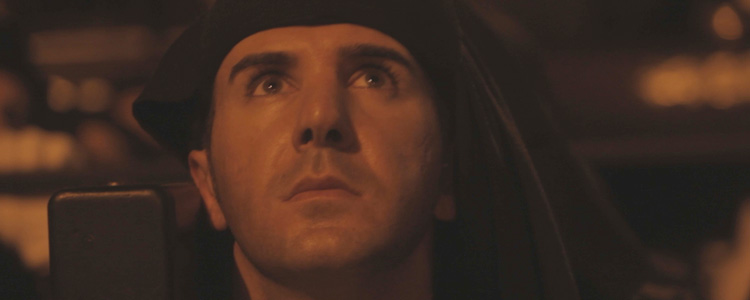
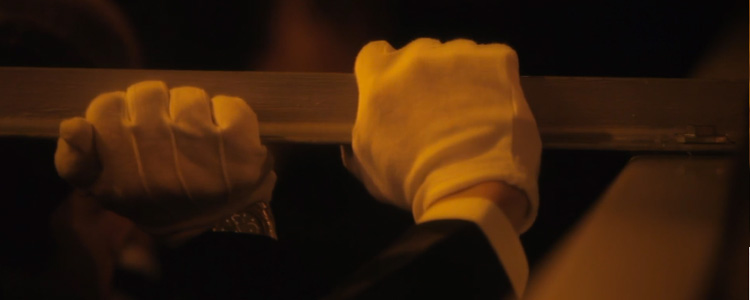
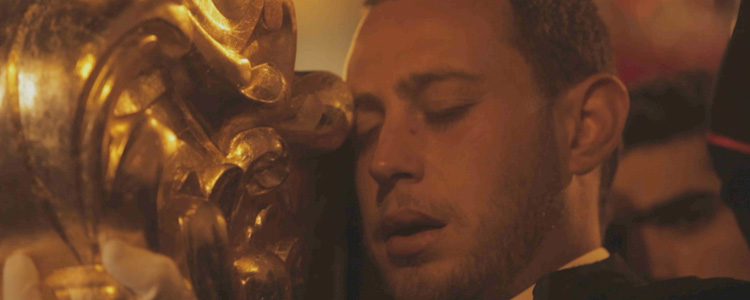
Winner of the Dutch Directors Guild Award, VIA DOLOROSA shows an intense catholic ritual, willfully separated from its religious context. Through a subtle montage of short-focused close-ups, MENNO OTTEN captures the emotions of the men as they carry a heavy cross, ultimately revealing pain as a transcendental experience. As the exterior sounds are gradually muted, the beating of the drum sets the pace of the men’s ritualistic stride, their labored breathing unconsciously synchronized in a unitary hum of quiet suffering. Thus, empathy awakened, we are taken on an initiatory journey through cheerfulness, pain, acceptance, peace and finally release. (BIEFF)
Director:

MENNO OTTEN (b. 1984, Netherlands) studied directing at the Netherlands Film and Television Academy in Amsterdam, where he has made award-winning documentaries such as NIGHTWATCHER and his graduation project, TIME WITHIN TIME. After graduating film school, he worked on several installations and recently opened an exhibition for The National Film and Sound Archive. His installations focus mainly on re-using and experimenting with found footage material. His studio, InnerVisions, focuses on experimental installations and art-projects. Menno Otten is a guest teacher at the Dutch Film and Television Academy and at the Open Studio School for Digital Media. He is currently in pre-production with his latest film, THE BARBERSHOP.
Website:
Contact:
mennoottenmail[at]gmail[dot]com
Festivals, awards:
- Dutch Directors Guild Award 2014
- IDFA International Documentary Film Festival Amsterdam 2013 – PARADOCS
- Santa Fe Filmfestival New Mexico 2014
Director's statement:
Filmed on the streets of Malaga, VIA DOLOROSA catches a group of men during an ancient religious ritual: every year they walk the way of Grief. Along with my crew, I decided to tackle this subject in a physical way, as if performing the same thing as the people we film: to carry the one they love most. Unique both in form and content, this short, clenched film leaves the viewer with a drastic and yet meditative experience. (Menno Otten)
Curator's comment:
Via Dolorosa is a pretext for Menno Otten to explore in a condensed manner the cathartic power of suffering. An important element of its special atmosphere is the binaural sound recording, which creates a 3D audio experience. The drumming sound that accompanies and coordinates the joint effort the men put into carrying the ritualistic objects transforms, during their walk, into a church song that urges to meditation. During the entire movie, the camera stays solely on the faces of the participants, never on the road per se or the statues they carry. Thus, it highlights the humane value of the ritual, focusing on the effort, involvement and harmony that forms between those who have joined forces for a common ideal. (Gabriela Lupu, BIEFF)
Filmed on the streets of Malaga, VIA DOLOROSA catches a group of men during an ancient religious ritual: every year they walk the way of Grief. Along with my crew, I decided to tackle this subject in a physical way, as if performing the same thing as the people we film: to carry the one they love most. Unique both in form and content, this short, clenched film leaves the viewer with a drastic and yet meditative experience. (Menno Otten)
Curator's comment:
Via Dolorosa is a pretext for Menno Otten to explore in a condensed manner the cathartic power of suffering. An important element of its special atmosphere is the binaural sound recording, which creates a 3D audio experience. The drumming sound that accompanies and coordinates the joint effort the men put into carrying the ritualistic objects transforms, during their walk, into a church song that urges to meditation. During the entire movie, the camera stays solely on the faces of the participants, never on the road per se or the statues they carry. Thus, it highlights the humane value of the ritual, focusing on the effort, involvement and harmony that forms between those who have joined forces for a common ideal. (Gabriela Lupu, BIEFF)