
- You are here: Home > THE SHADOW'S SHARE
You are here
CinemaPRO -
Friday, December 12, 2014 - 18:00
Written by:
Olivier Smolders, Thierry Horguelin
Cast:
Benoît Peeters, Marie Lecomte, Tatiana Nette
Cinematography:
Jean-François Spricigo
Editing:
Olivier Smolders
Sound:
Marc Bastien
Producer:
Olivier Smolders, Christian Popp
Production:
Les Films du Scarabée, Yuzu Productions, Wallonie Image Production
Romanian premiere
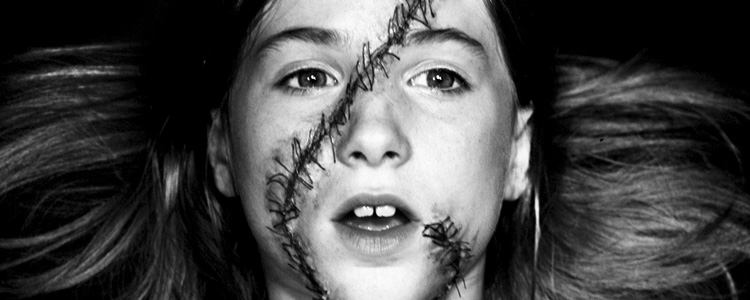
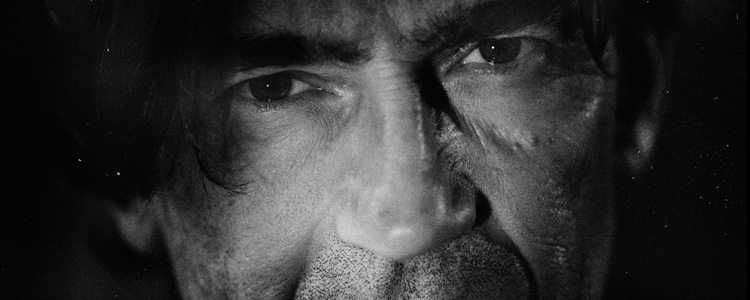
Questioning the history of the artistic avant-garde, THE SHADOW'S SHARE is a work of aestheticized macabre founded on the myth of photography as art that little by little kills its subject. Screened at Clermont-Ferrand, the film explores the pains, obsessions and especially grotesque works of the vanished photographer Oskar Benedek, and weaves around him a whole counterfeit personal history. Offering his protagonist for examination, Smolders violently brings down the viewer from his condescendingly detached position of one who believes he has solved the mystery, and shows him that people cannot be known, much less deciphered. (Diana Mereoiu, BIEFF)
Director:
OLIVIER SMOLDERS (b. 1956) is a Belgian producer, screenwriter and filmmaker who has published essays concerning both literature and cinema. He is best known for his austere short-films of great aesthetic rigor. Often shot in black and white, they many times link deep and morbid themes, such as love in relation to death, or disturbing intimate confessions. His work, similar to the literary genre of the novella, has received world-wide recognition being screened in numerous festivals. In 2005 he released his first feature film, BLACK NIGHT, an oneiric color film with a complex narrative structure that deals with the theme of metamorphosis. Other films renowned films of SMOLDERS are ADORATION (1987) and MORT À VIGNOLE (1998).
Website:
Contact:
info[at]smolderscarabee[dot]be
Festivals, awards:
- Clermont-Ferrand International Short Film Festival 2014
- IndieLisboa Independent Film Festival 2014
Director's statement:
The Benedek case is very distinct in the history of photography and art in general. The problems posed by Benedek’s work are both ethical - some of his images, taken during the war, continue to shock even now - and aesthetic: he spanned the days of all of the avant-gardes of his time, sometimes strokes ahead of other artists who went on to become famous. Benedek’s story can seem dubious, rather like his images, appearing to constantly deceive with what they show us and tell us. THE SHADOW'S SHARE examines this duplicity, focusing both on the historical context of 1940s Hungary and the very nature of this body of work obsessed by the theme of masks. (…) It's a work of mosaic composition and the idea of the film’s stitching is composed little by little, adding one element after another, as tangible pieces of evidence regarding the artist’s different stages. It was shown that what actually lies behind History, when we talk about history with a capital H, are the personalities of those deceased. In what I’m concerned, the film starts from the idea that we never know the truth about people, and that all fiction, be it based on actual events or not, is nothing more than a reconstruction. The film leaves it to the viewer to take the elements brought to the screen and rewrite them. (Olivier Smolders)
The Benedek case is very distinct in the history of photography and art in general. The problems posed by Benedek’s work are both ethical - some of his images, taken during the war, continue to shock even now - and aesthetic: he spanned the days of all of the avant-gardes of his time, sometimes strokes ahead of other artists who went on to become famous. Benedek’s story can seem dubious, rather like his images, appearing to constantly deceive with what they show us and tell us. THE SHADOW'S SHARE examines this duplicity, focusing both on the historical context of 1940s Hungary and the very nature of this body of work obsessed by the theme of masks. (…) It's a work of mosaic composition and the idea of the film’s stitching is composed little by little, adding one element after another, as tangible pieces of evidence regarding the artist’s different stages. It was shown that what actually lies behind History, when we talk about history with a capital H, are the personalities of those deceased. In what I’m concerned, the film starts from the idea that we never know the truth about people, and that all fiction, be it based on actual events or not, is nothing more than a reconstruction. The film leaves it to the viewer to take the elements brought to the screen and rewrite them. (Olivier Smolders)