
- You are here: Home > TAPROBANA
You are here


GABRIEL ABRANTES (b.1984) is an artist and filmmaker who has produced a significant body of work in film since studying at The Cooper Union, L’École National des Beaux-Arts and Le Fresnoy Studio National des Arts Contemporains. ABRANTES is the winner of several prizes, including the Golden Leopard for Best International Short Film at the Locarno Film Festival 2010 for his film A HISTORY OF MUTUAL RESPECT. He won the BIEFF 2010 Award for Best Cinematography for his works OLYMPIA and A HISTORY OF MUTUAL RESPECT. His films have premiered at festivals such as La Biennale di Venezia, Locarno, Toronto. He has exhibited since 2002 in museums such as the MIT: List Center for the Arts in Boston, Palais de Tokyo in Paris, Musee d’Art Moderne in Paris, and Museu Serralves in Porto. His filmography includes: ENNUI ENNUI (2013), LIBERTADE (2011), A HISTORY OF MUTUAL RESPECT (2010), OLYMPIA I + II (2007).
- Prix UIP Berlin (European Short Film) - Berlin International Film Festival 2014
- Best European Short Film Nominee - European Film Awards 2014
- Toronto International Film Festival 2014
- BFI London Film Festival 2014
- Curtas Vila do Conde 2014
- Centre d’Art Contemporain Genève 2014
- Gent International Film Festival 2014
- World Film Festival of Bangkok 2014
- Guanajuato International Film Festival 2014
- Kyiv International Short Film Festival 2014
- Curto Circuito International Short Film Festival 2014
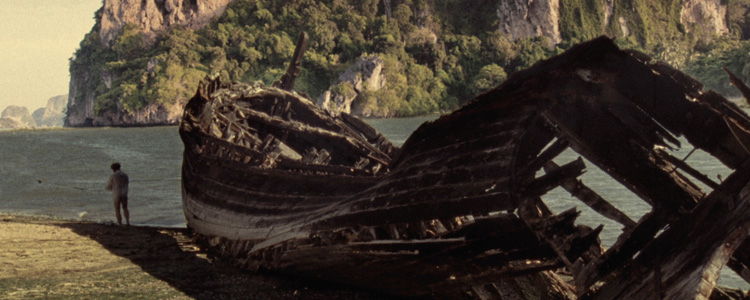
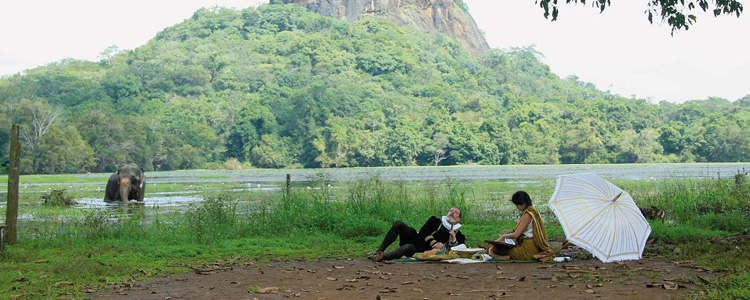
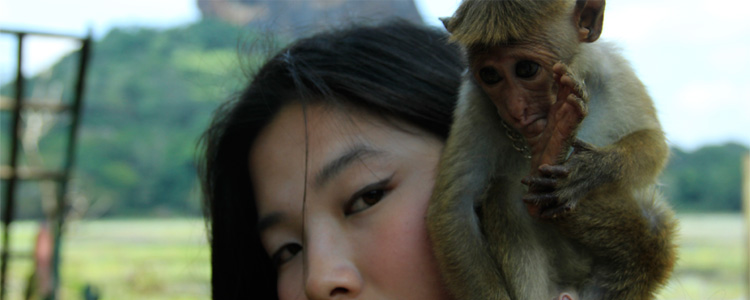
Camões was the first European poet to have an extended experience in Africa, India and Indochina. He wrote Os Lusíadas while he was exiled in the Indes, a poem that glorifies the Portuguese navigators that departed from Lusitanian shores and traveled to Taprobana, now known as Sri Lanka. Many myths surround Camões’ voyages, and one in particular was an inspiration for this film. It has Camões falling in love with a Chinese courtesan, which he then baptized with a Greek nymph’s name: Dinamene. The myth goes on to have Camões and Dinamene imprisoned on a boat to Goa and suffering a shipwreck. Supposedly his lover drowned, as Camões was too busy swimming after his manuscript. TAPROBANA is intended as a poetic and absurd satire about this contradictory and charming character; a European exiled in the Indes, but obsessed with his homeland; an iconoclast rapscallion that wrote some of the most sublime verses of the Portuguese language, where spiritual illumination is inextricable from sexual apotheosis. (Gabriel Abrantes)